
 Language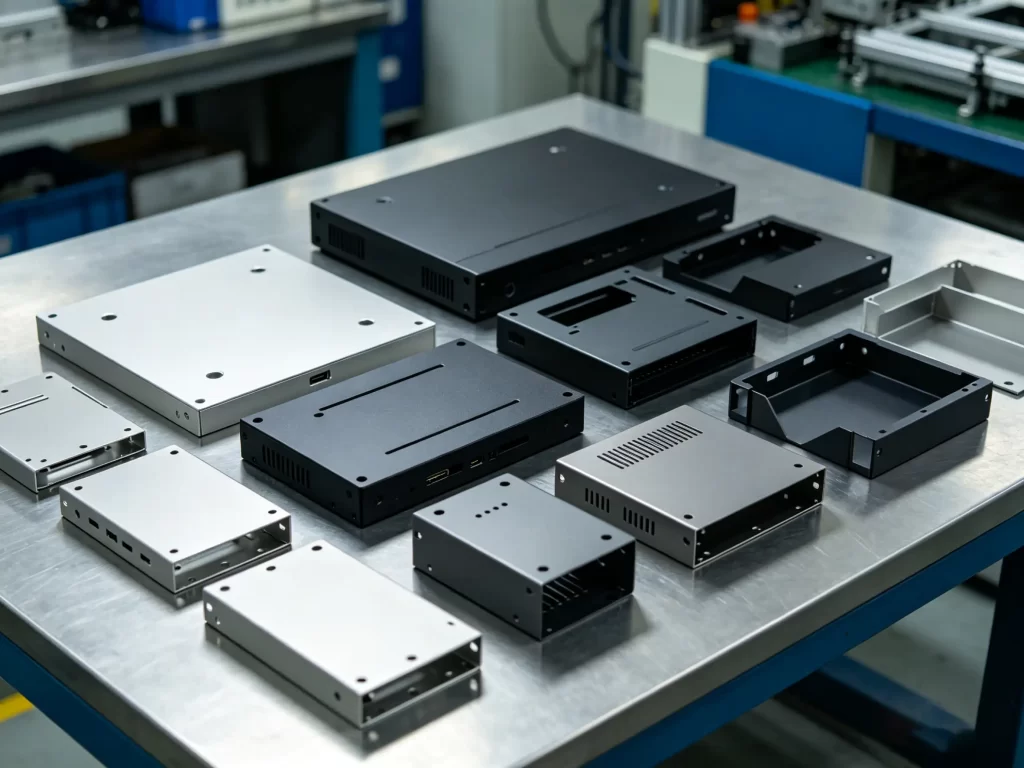
Aluminum anodizing is often treated as a routine finishing step. In outsourced manufacturing, though, it affects far more than color and appearance. Alloy grade, pretreatment method, coating thickness, sealing condition, racking points, and inspection criteria can all shape how samples are judged and how stable production remains later on. When I review projects like this, I usually do not start with the color name. I look first at how clearly the requirements have been defined. In AAC’s technical guidance, alloy and temper, mechanical surface condition, chemical pretreatment, and anodic coating type are all listed as items that should be confirmed up front.
Purchasing Decisions Should Start with the Part’s Actual Use
The same anodizing process does not serve every aluminum part in the same way. Appearance parts are judged more by color consistency and batch-to-batch stability. Functional parts are judged more by coating performance, wear resistance, and dimensional fit. AAC notes that different aluminum alloy series respond differently to anodizing. In general, 6xxx series alloys tend to produce more stable anodized finishes, while high-copper or high-silicon materials are harder to control from an appearance standpoint. In our early-stage reviews, we usually confirm whether the part is a panel, an enclosure shell, or a wear-resistant functional component before choosing between standard anodizing, dyed anodizing, or hard anodizing. In my experience, the earlier that decision is made, the less back-and-forth there is during sampling.
Material and Pretreatment Set the Upper Limit for Appearance
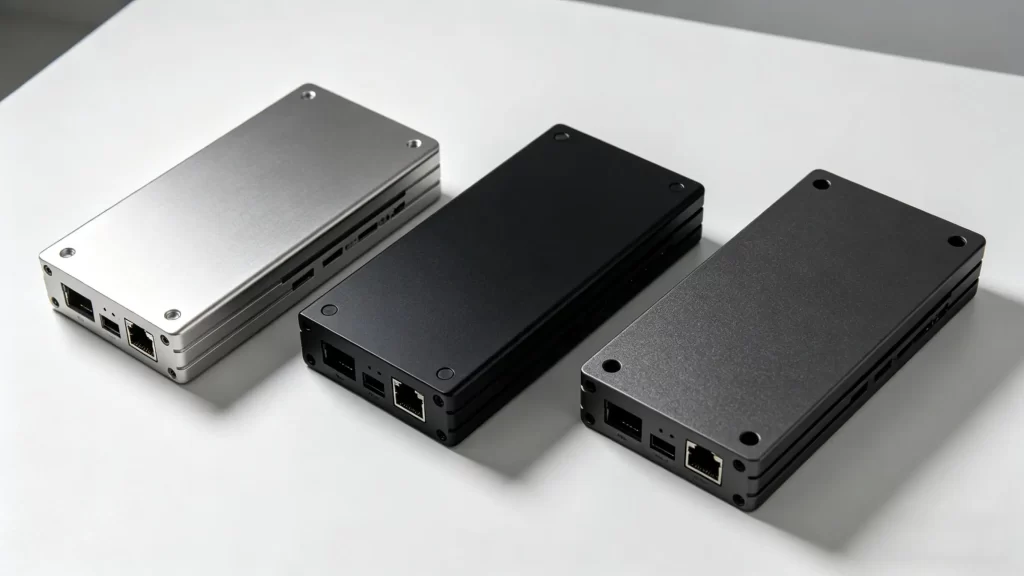
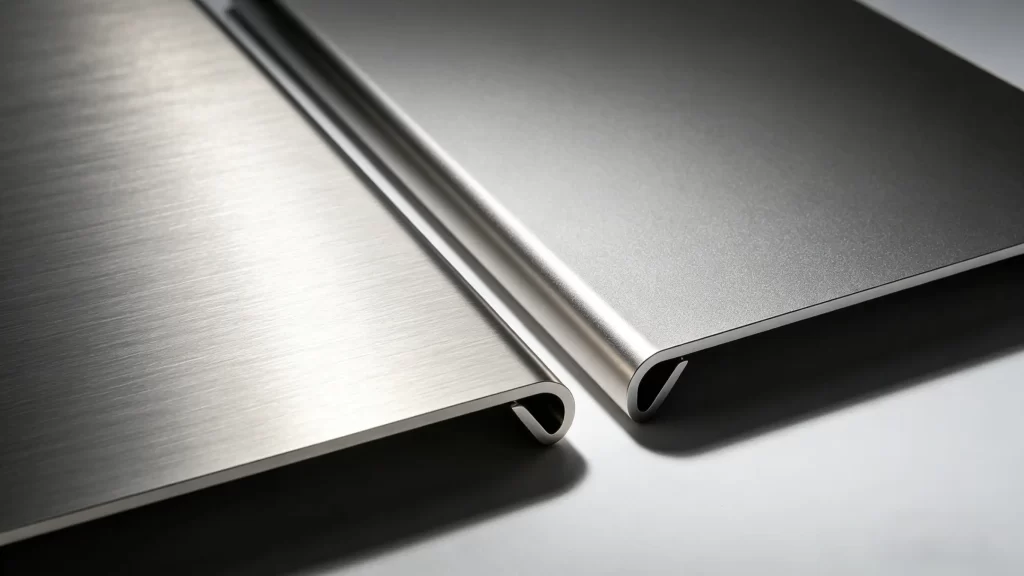
Many buyers ask first whether the color can be kept consistent. I usually look at the material and pretreatment first. The reason is simple. Anodizing is not a covering coating. Existing grain, light scratches, and fabrication marks often remain visible after anodizing. AAC also states clearly that both the mechanical surface condition and the chemical pretreatment directly affect the final appearance. This becomes especially important for projects such as enclosures and panels. When we review cosmetic parts, we usually confirm the brushing direction, visible faces, and rack contact locations together. Otherwise, a sample may look acceptable on its own, but once assembled into the final product, uneven reflection can show up. That happens more often than people expect.
Purchasing Documents Need to Be Written at an Actionable Level
What really reduces rework is not writing a single note that says anodized. It is defining the key parameters in a way the supplier can execute directly. The purchasing documents should clearly specify the alloy grade and temper, anodizing type, target coating thickness, color requirement, visible surface definition, rack mark limitations, sealing requirements, and the treatment of conductive areas, threaded features, and mating surfaces. AAC states that 25 microns equals 1.0 mil. The same document also explains that Type II refers to sulfuric acid anodizing, while Type III refers to hard anodizing. For me, those two references are especially useful because they help purchasing, engineering, and the supplier work from the same language. Once that is aligned, quoting, sampling, and inspection usually move much more smoothly.
Inspection Requirements Determine the Cost of Later Communication
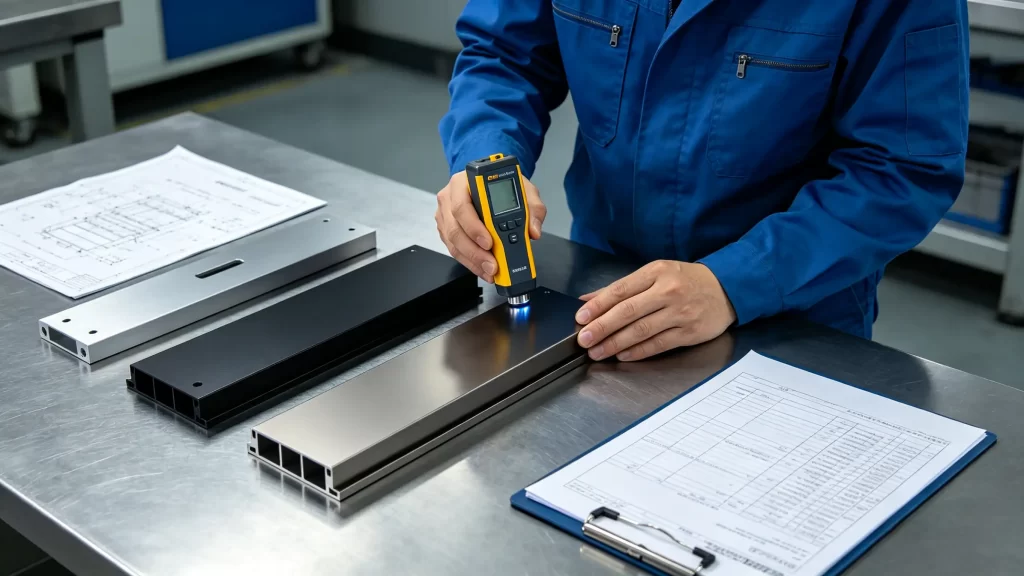
When a project gets revised repeatedly, it is often not because the process itself is out of control. More often, the acceptance criteria were never clearly defined in the first place. Coating thickness can be checked in accordance with ASTM B244. WBDG also lists it as a recognized method for anodic coating thickness measurement. Appearance inspection should define visible surfaces, secondary surfaces, acceptable color variation, permitted rack contact areas, and acceptance limits for scratches, dents, and localized shading. When I look at colored anodized parts, I usually recommend approving a control sample before releasing the order to production. Color consistency is affected by material lot, pretreatment route, and sealing condition at the same time. Once the reference sample is locked in, a lot of disputes can be avoided later.
Process Selection Should Follow the Project Goal
| Process Option | Typical Applications | Main Advantages | Key Purchasing Focus |
| Clear anodizing | Panels, enclosures, housings | Clean appearance and relatively stable cost | Material lot control, coating thickness, rack marks |
| Dyed anodizing | Black cosmetic parts, identification parts | Stronger visual effect | Color variation, sealing, approved reference sample |
| Hard anodizing | Wear-resistant functional parts | Thicker coating and better wear resistance | Dimensional compensation, threaded areas, mating surfaces |
This table reflects the trade-offs buyers deal with most often. Projects that prioritize appearance are usually more sensitive to batch color variation and inconsistent surface detail. Projects that prioritize function are more sensitive to coating thickness affecting fit and assembly. When we review these jobs at Baoxuan Sheet Metal Fabrication, we also clarify that direction early. In my view, once the process route starts off in the wrong direction, it can still be corrected, but it usually takes another round or two of discussion, and that is where time gets lost.
Give the Supplier the Full Set of Requirements in One Round
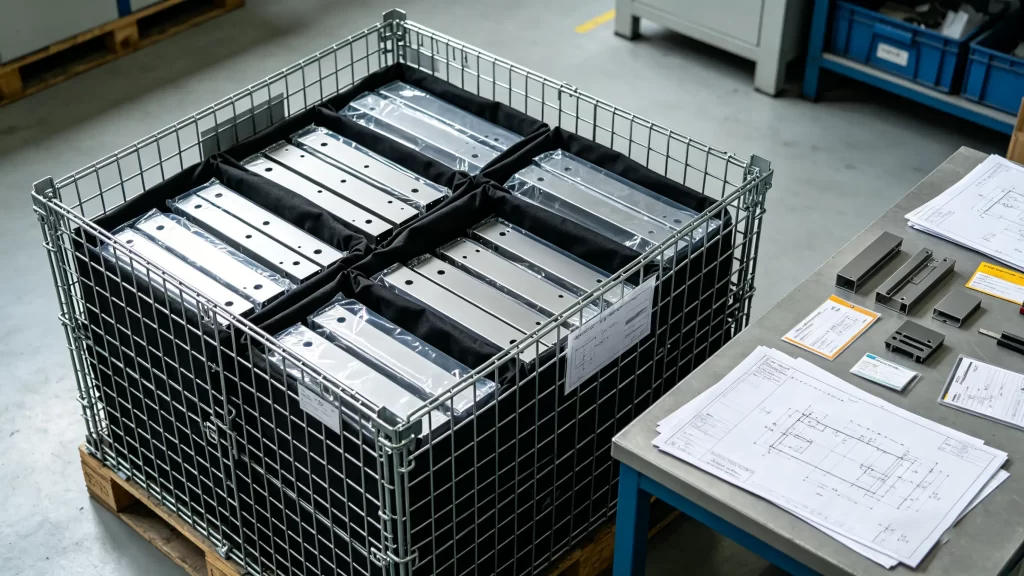
When communicating with a supplier, I strongly prefer giving the full set of information at once instead of adding details along the way. The drawing revision, visible surface markings, alloy grade, sheet thickness, quantity, target coating thickness, color standard, whether corrosion testing is required, which inspection criteria apply, and the packaging and anti-scratch requirements should all be confirmed before sampling begins. It may seem more detailed, but in practice it saves time. Problems with anodized parts often do not happen because the factory cannot make them. More often, the purchasing requirements were left too broad, so the sample passes but production starts to drift. When we handle these orders at Baoxuan Precision Manufacturing, tightening the requirements at the front end usually makes color consistency, appearance protection, and delivery control much more manageable. That is something I pay close attention to.
Process Trends Also Belong in the Purchasing Review
In the past two years, overseas projects have been asking more detailed questions about process compliance and alternative treatment routes. AAC’s reference to the MIL-A-8625 system includes Type IC and Type IIB as non-chromate alternatives. For projects that need both corrosion resistance and compliance assurance, it is more efficient to confirm the process type, sealing method, and service environment during the purchasing stage rather than adding those questions later. My own view is that for export programs especially, anodizing should not be treated as just another finishing step. It is tied directly to drawing definition, acceptance criteria, and delivery risk.
FAQ
Q: What is the safest way to specify coating thickness when purchasing aluminum anodizing?
Write it directly in microns or mils. Do not just say standard anodizing. Since 25 microns equals 1.0 mil, that conversion is commonly used in purchasing documents. I also usually recommend defining the tolerance range at the same time, because it makes communication much easier.
Q: What should I check first when evaluating an aluminum anodizing supplier?
I usually start with pretreatment stability, whether they have a formal sample approval process, and whether they use a consistent inspection standard in production. Price comes after that. In many cases, pricing differences are an early sign of how much risk may appear later.
Q: What affects color consistency the most?
The main factors are alloy grade, pretreatment, dyeing method, sealing condition, and batch control. For high-appearance parts, I nearly always recommend approving a reference sample first. Otherwise, color discussions tend to come back during production.
Q: Can anodizing hide scratches on the surface?
Usually not. Existing surface texture and defects often remain visible through the anodic coating, so pretreatment and surface protection need to be defined in advance. This point is often underestimated early on.
Q: What standard is commonly used for coating thickness measurement?
A common method is ASTM B244 for anodic coating thickness measurement. It is widely recognized and relatively easy for all parties to align on.
If you are currently screening aluminum anodizing suppliers, or you already have drawings but the acceptance criteria are still not clearly defined, it is worth tightening up those parameters and inspection requirements now. When we review projects, we always hope the requirements are fully defined at the beginning, because the more solid that front-end definition is, the smoother sampling, production, and delivery usually become.
