
 Language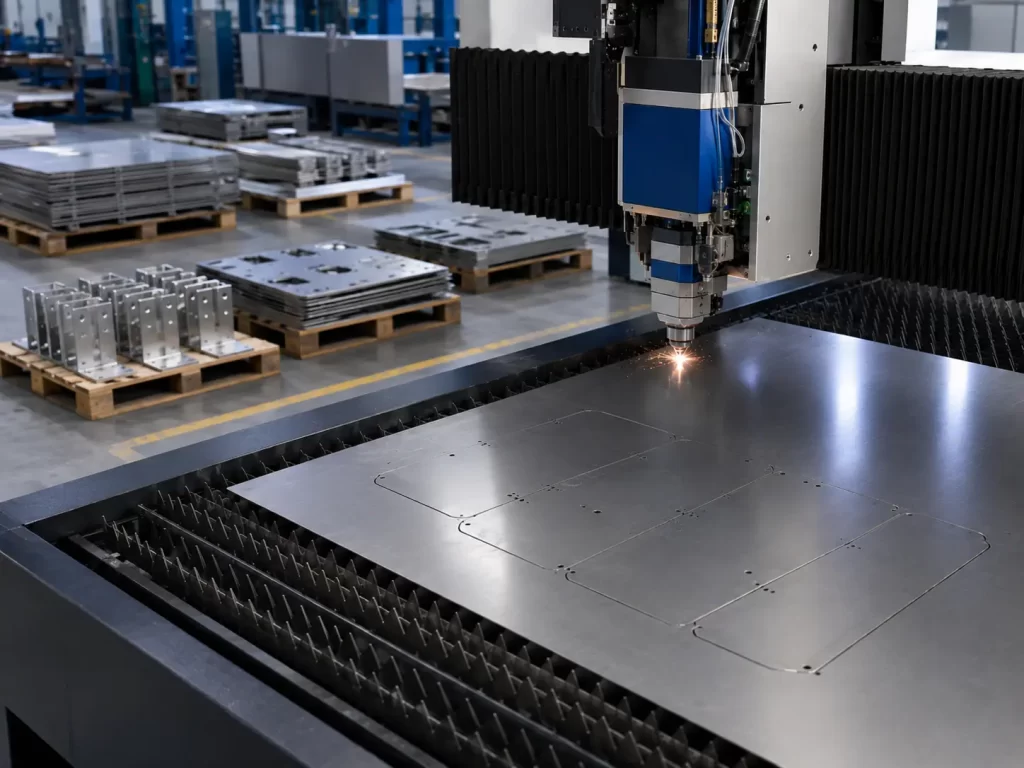
Defining the Process
Stainless steel laser cutting uses a high-energy-density beam to locally melt the material, with assist gas blowing away the dross to produce profiles, holes, slots, and complex geometries. In my experience discussing projects with clients, one point comes up repeatedly: the real measure of a shop’s capability isn’t spindle power or cutting speed—it’s dimensional tolerance, kerf compensation, edge quality, batch consistency, and on-time delivery.
These parts don’t sit on a shelf for display. They get assembled, welded, bent, and integrated into larger structures. A hole that’s off by a fraction of a millimeter or a burr that’s slightly too tall can throw off every downstream operation. The World Stainless Association notes that stainless steel must contain at least 10.5% chromium, which is what gives the material its corrosion resistance. Different grades—304, 316, 430—each behave differently under heat input, and they each require different approaches to burr control and surface protection. I’ve seen projects where simply switching the grade on the same part demanded entirely different cutting parameters and produced noticeably different edge quality. High-precision stainless steel laser cutting isn’t just about running a program—it’s the result of material knowledge, equipment capability, process discipline, and inspection working together.
Tolerance Control as a Benchmark for Shop Capability
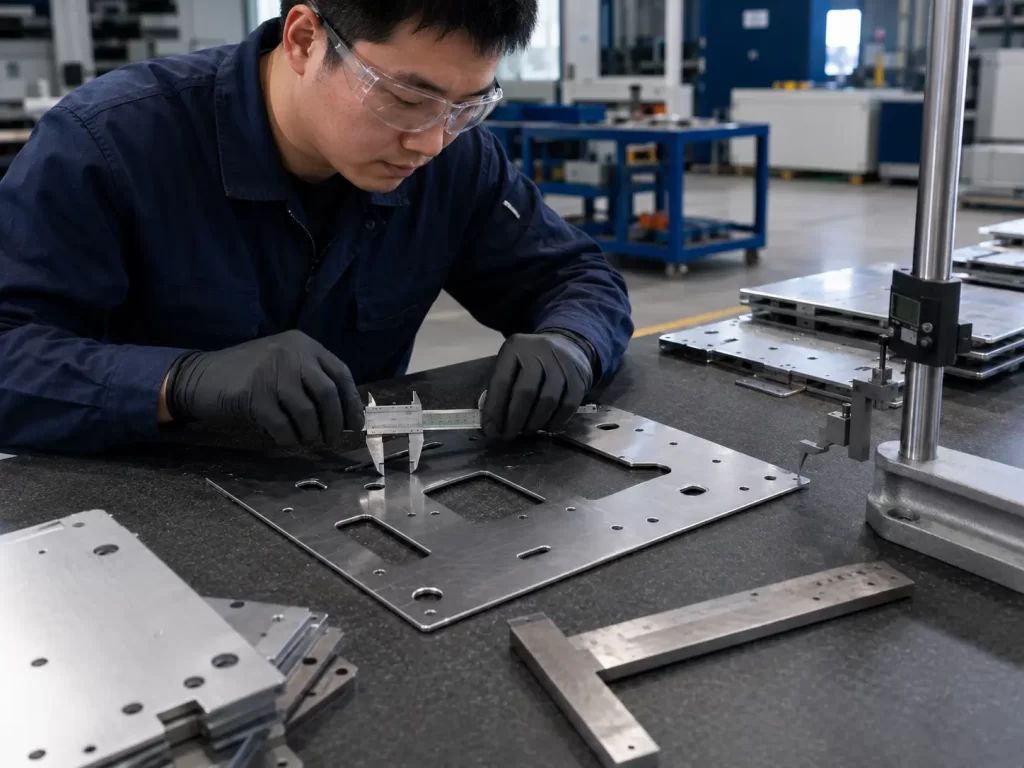
Tolerance control is the single most telling indicator of a laser cutting shop’s real capability. Take the same 2.0 mm stainless sheet to two different shops and the hole spacing, overall dimensions, and diagonal consistency can vary significantly. The factors at play include sheet flatness, focus position, nozzle condition, assist gas pressure, cut speed, nesting orientation, and heat distortion management—any one of these can go wrong and the part will show it.
ISO 9013:2017 establishes a classification system for thermal cut quality, covering laser cutting of materials from 0.5 mm to 32 mm thick. It addresses cut-face quality, perpendicularity, roughness, and heat-affected zones. The real value of a standard like this is that it gives both the buyer and the shop a shared language for acceptance criteria—so neither side is guessing what the other means.
When I handle stainless laser cutting orders at Baoxuan Sheet Metal, I typically advise clients to separate critical dimensions from non-critical ones. Assembly holes, locating slots, and bend datum edges deserve tight control. Outer profiles or non-functional edges can be held to more practical tolerances based on actual use. This approach secures the fit-up where it matters while avoiding unnecessary cost on features that don’t need it.
Drawing Review and Kerf Compensation
Precision starts with the drawing review. The problems I encounter most often in real projects include mismatched units, unclear datums, undersized holes, overly narrow slots, bend interference, and missing grain-direction callouts. If these aren’t sorted out before cutting begins, rework is almost guaranteed.
Kerf compensation is one of those parameters that’s easy to overlook yet has a major impact on final dimensions. As the beam passes through the material it leaves a cut of a certain width, and that width changes with material thickness, power, speed, gas type, and surface condition. On stainless steel panels, equipment housings, rack brackets, and automation parts, I pay close attention to hole-position deviation, burr height, heat-affected zone, and edge perpendicularity—because all of these directly affect how well the client’s assembly goes together.
The sample phase is the part of a project I value most. Hole spacing, overall dimensions, surface scratches, grain direction, and deburring standards—I prefer to lock all of these down during sampling. Once the sample is approved, those parameters carry into production, and subsequent batches stay consistent.
Comparing Common Processing Methods
| Method | Best Suited For | Advantages | Limitations |
| Fiber laser cutting | Stainless housings, brackets, panels | Flexible geometry, high throughput | Small holes in thick plate need evaluation |
| CNC punching | High-volume hole arrays, louvers | Fast batch processing, consistent hole profiles | Limited by tooling |
| Waterjet cutting | Thick plate, low-heat-input parts | Minimal thermal distortion | Lower speed, less refined edge quality |
| Laser + CNC finishing | Precision locating holes, datum faces | Critical dimensions stay tight | Additional ope |
No single method wins in every scenario—it depends on how the part will be used. My experience has been that standard stainless enclosures are most economical with fiber laser cutting. When locating holes directly affect assembly accuracy, I recommend laser cutting the blank and then finish-machining the critical features. It adds cost, but the key dimensions stay reliable.
Quality Inspection and Batch Delivery Control
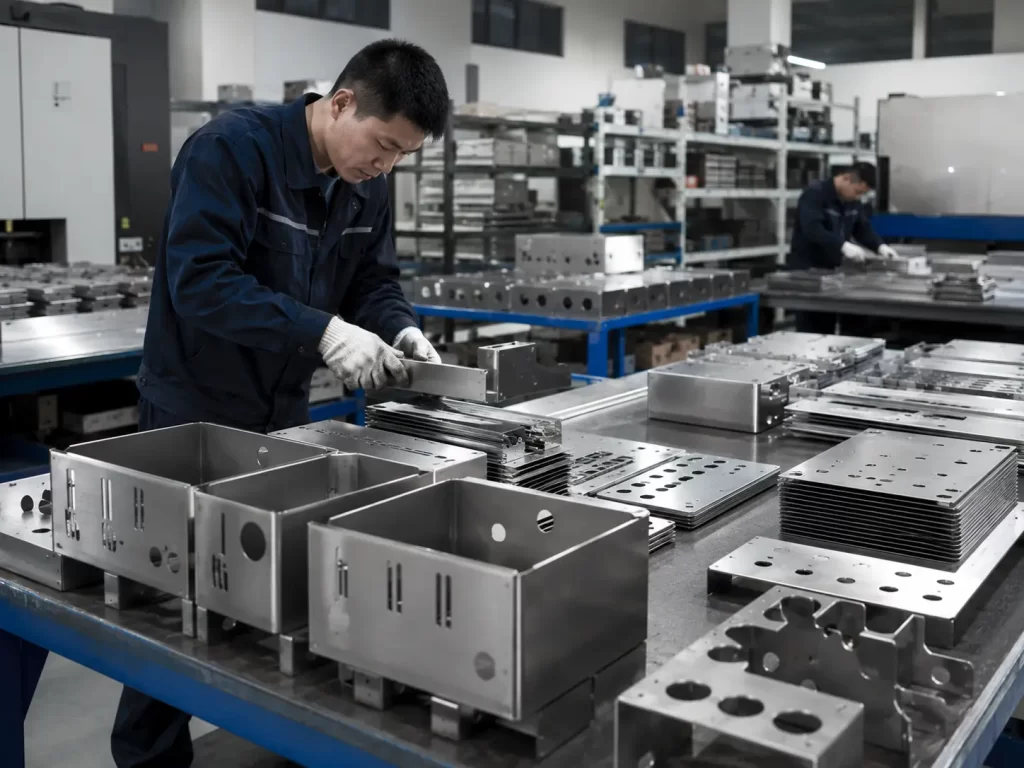
A single good part doesn’t guarantee a stable batch. A dependable shop should run first-article inspection, in-process checks, and pre-shipment sampling. Inspection covers overall dimensions, hole spacing, diagonals, burrs, surface scratches, and packaging integrity. Common instruments include calipers, height gauges, optical comparators, and CMMs. Parts that require powder coating, brushing, passivation, or welding also need confirmation against the relevant surface-finish specifications.
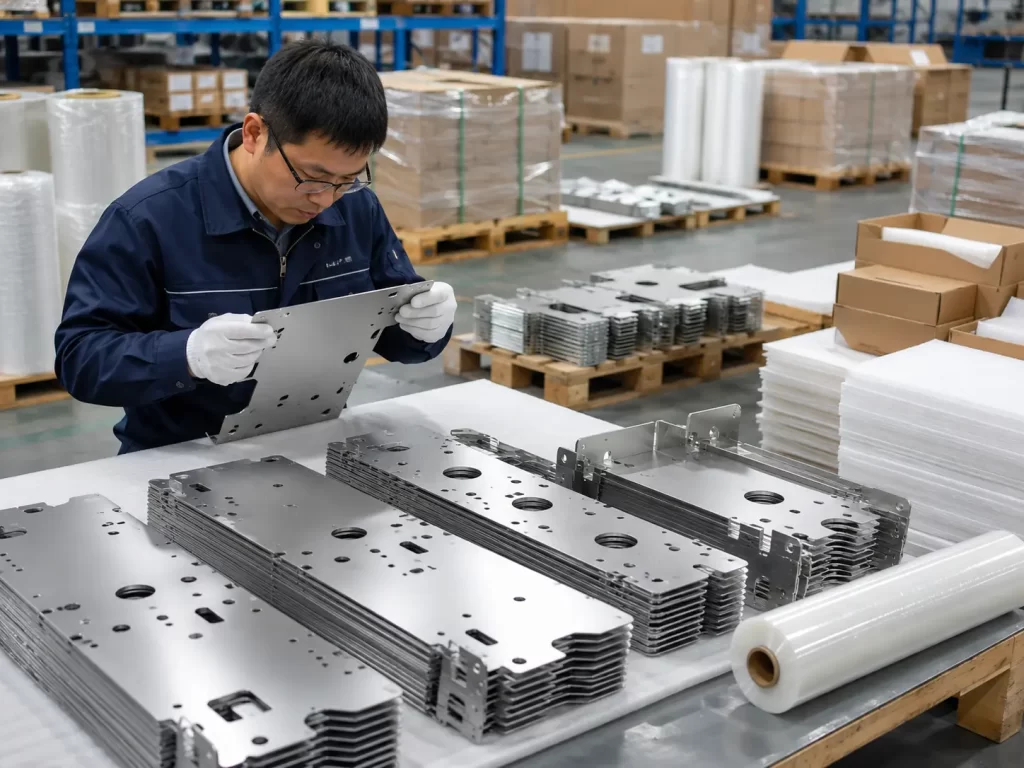
I’ve found that upfront communication matters most. The more clearly material grade, thickness, tolerances, quantities, surface requirements, packing method, and delivery milestones are defined, the smoother production runs. For overseas buyers especially, this kind of transparency carries more long-term value than the lowest price. At Baoxuan Metal Fabrication, I make a point of flagging potential risks early so issues don’t surface at the shipping dock.
FAQ
How do you ensure batch tolerance consistency?
Through a combination of drawing review, kerf compensation, first-article inspection, in-process checks, and pre-shipment sampling. Critical holes and assembly dimensions should carry their own acceptance criteria rather than sharing a single general tolerance.
What information should I provide when ordering stainless laser-cut parts?
Supply a DXF, STEP, or PDF drawing with the material grade, thickness, quantity, tolerances, grain direction, post-processing requirements, and intended application. If the parts will be bent or welded downstream, mention that as well.
Is some burring normal after laser cutting stainless steel?
A small amount of burring is common and relates mainly to material thickness, focus, speed, and gas pressure. What matters most is whether the shop has a consistent deburring process and a defined edge-quality acceptance standard.
Which industries commonly use stainless steel laser-cut parts?
Food-processing equipment, medical devices, automation systems, electrical and electronic enclosures, rack and cabinet manufacturing, and precision equipment housings are among the most frequent applications.
Reliable Delivery Depends on Controlling the Entire Chain
The best laser cutting shops don’t just cut blanks—they connect material selection, drawing review, process planning, inspection, and delivery into one controlled workflow. Partnering with a supplier that holds tight tolerances consistently reduces rework, assembly failures, and communication overhead. If you have stainless steel panels, brackets, housings, or precision sheet metal parts to produce, send your drawings and requirements to Baoxuan Sheet Metal. I’d recommend confirming process feasibility first, then moving to samples or full production—it makes the whole project run more smoothly.
