 Language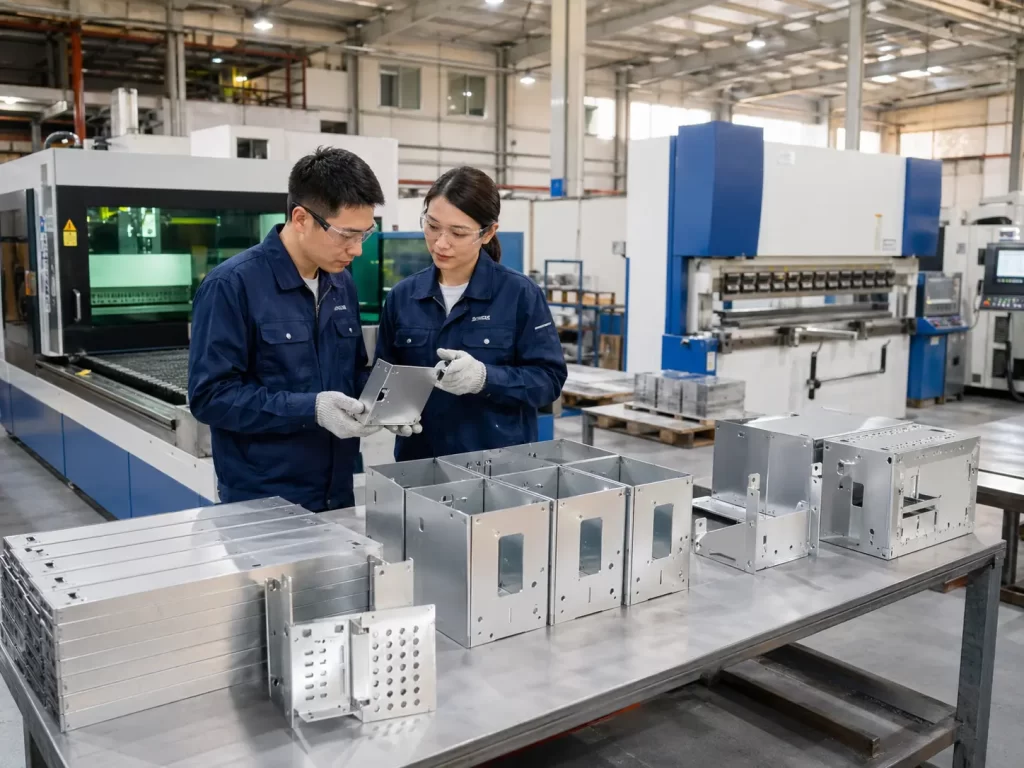
In OEM sheet metal projects, raised areas, bulges, and localized deformation can directly affect assembly accuracy, surface appearance, and batch-to-batch consistency. For overseas buyers, the key question is not simply whether a defect can be fixed. What really matters is whether the supplier can control risks early through material selection, structural review, process planning, and inspection.
As a custom sheet metal fabrication supplier, we usually start by identifying the root cause of the raised area, then choose a solution that fits both prototyping and volume production. This helps customers reduce rework, lower production risk, and achieve more stable assembly results.
What Causes Raised Areas in Sheet Metal Fabrication?
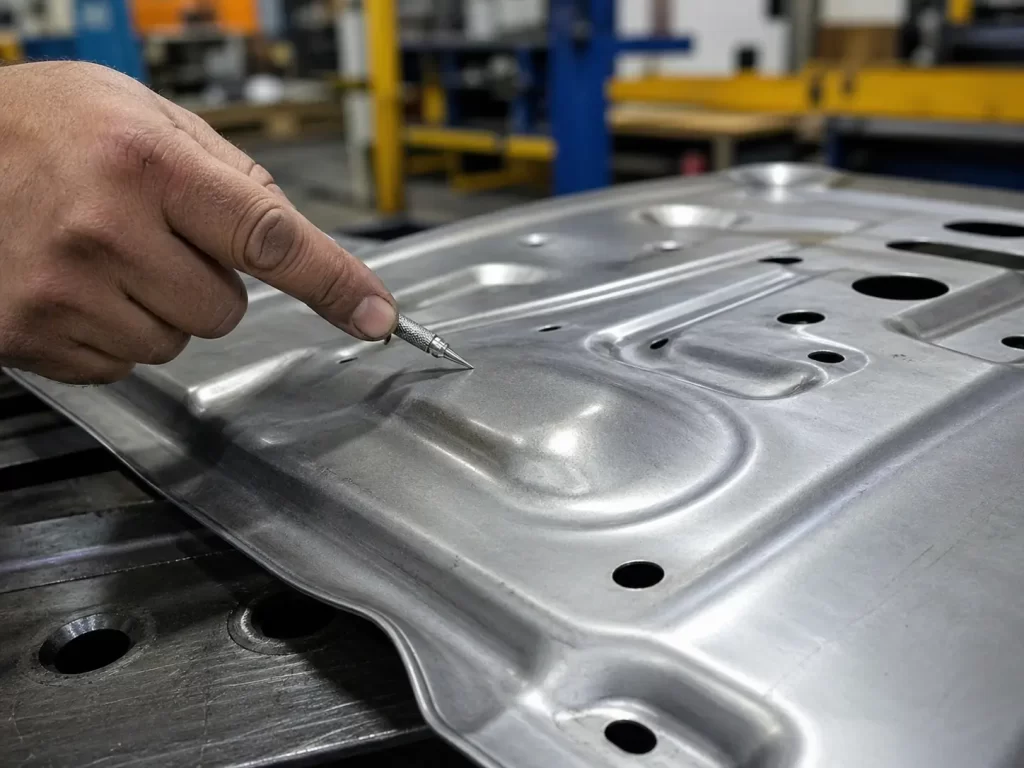
Raised areas in sheet metal parts often appear during stamping, bending, deep drawing, welding, riveting, or assembly. Uneven material stress, improper die clearance, poor bending sequence, excessive welding heat, or weak fixture control can all lead to bulging, waviness, or changes in flatness.
In real projects, we evaluate the issue based on 2D drawings, 3D files, material grade, sheet thickness, tolerance requirements, and assembly position. A raised area on a visible surface, mounting surface, connection area, or reinforcement structure may require a different treatment standard.
How Material, Thickness, and Part Design Affect Raised Area Control
Different materials respond differently during fabrication. Aluminum is lightweight, but it is more likely to show stretching marks during forming. Stainless steel has good strength, but it also has more noticeable springback. Cold-rolled steel and galvanized steel are widely used in industrial sheet metal parts, but they require careful control of surface marks and welding deformation.
Sheet thickness also affects the process choice. Thin sheets are more likely to deform, while thicker sheets require more stable pressure, stronger fixturing, and better forming control. For parts with ribs, embossed features, flanges, mounting holes, or localized formed areas, we usually carry out a DFM review before prototyping.
If the design itself is likely to cause raised areas, we may suggest improving the bend radius, hole spacing, forming sequence, or reinforcement structure.
How Sheet Metal Fabrication Handles Raised Areas
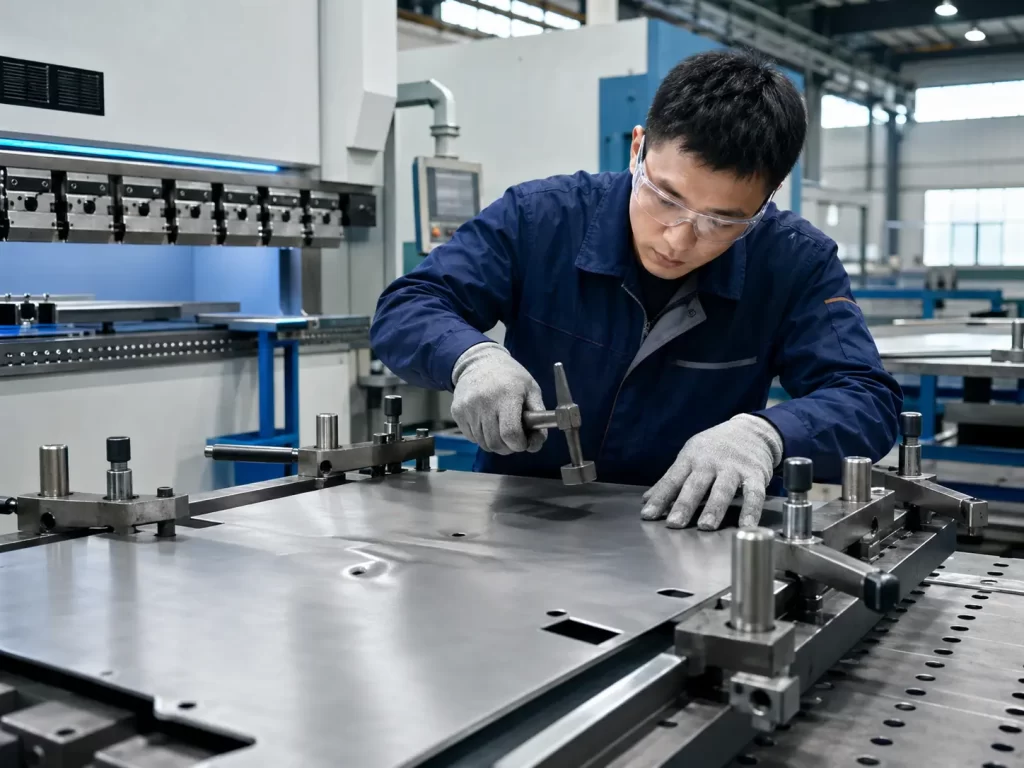
Handling raised areas in sheet metal fabrication usually requires a combination of processes, not just one corrective step. Common methods include die optimization, step-by-step forming, flattening, local reshaping, post-weld correction, grinding, and inspection before surface finishing.
If the raised area comes from stamping or forming, we focus on die clearance, holding force, and forming sequence. If it comes from bending, we check the bend radius, flat pattern dimensions, and springback compensation. If it comes from welding, we control welding sequence, fixture positioning, and heat input.
Our principle is to reduce problems as early as possible instead of leaving defects for later repair. For OEM volume orders, this has a direct impact on quality, cost, and lead time.
How to Control Dimensional Accuracy, Appearance, and Strength
When dealing with raised areas, it is not enough to simply make the surface look flat. We also check dimensions, appearance, and structural strength.
For dimensions, we inspect hole positions, edge distances, flatness, bending angles, and assembly gaps. For appearance, we check for dents, cracks, waviness, grinding marks, and visible defects after coating. For strength, we evaluate whether the correction process affects connection points, load-bearing areas, or long-term performance.
For standard industrial sheet metal parts, we use calipers, height gauges, angle gauges, and custom inspection fixtures. For higher-precision parts, we can follow stricter dimensional inspection requirements based on the project. Before mass production, we usually recommend confirming first articles to ensure the process is stable.
How OEM Buyers Can Evaluate a Supplier’s Ability to Handle Raised Areas
When choosing a sheet metal supplier, overseas buyers should look at several capabilities. Can the supplier understand engineering drawings and assembly requirements? Can they provide DFM feedback during the prototyping stage? Do they have integrated capabilities such as laser cutting, stamping, bending, welding, riveting, grinding, surface finishing, and assembly? Do they have first article inspection, in-process inspection, and final inspection procedures?
A reliable supplier should do more than manufacture parts according to drawings. They should be able to identify risks before production. For example, they should know whether a raised feature may affect assembly, whether a welding area may cause bulging, or whether a certain material is suitable for the required surface finish.
These decisions directly affect the stability of an OEM production project.
Cost, Volume Production, and Lead Time
Raised area correction can affect cost, but the bigger cost usually comes from unstable production, rework, and delivery delays. For small-batch projects, quality can often be controlled through manual correction and piece-by-piece inspection. For volume production, stable tooling, fixtures, work standards, and inspection procedures become much more important.
When preparing a quotation, we consider material, sheet thickness, structural complexity, tolerances, surface finish, inspection requirements, and lead time. Our goal is not simply to offer the lowest price, but to help customers choose a fabrication solution that is more suitable for production.
Common Raised Area Treatment Methods and Their Applications
| Process Method | Suitable Application | Main Value |
| Die optimization | Stamping, embossing, localized forming | Improves production consistency |
| Step-by-step forming | Deep drawing or complex structures | Reduces cracking and bulging |
| Local reshaping | Small raised areas or deformation | Corrects appearance and dimensions |
| Post-weld correction | Welding bulges and flatness changes | Improves assembly stability |
| Grinding and finishing | Minor defects on visible surfaces | Improves surface quality |
| Inspection fixtures | Volume production parts | Ensures consistent assembly |
Practical Advice and Common Mistakes
One common mistake is waiting until the finished part is complete before dealing with raised areas. This often increases rework costs and may affect powder coating, anodizing, plating, or brushing results. A better approach is to control the risk during design review, prototyping, and first article approval.
Another mistake is judging only by whether the surface looks flat. In OEM projects, mounting surfaces, hole positions, edges, and connection areas are just as important. We usually recommend that customers provide complete drawings, 3D files, surface finishing requirements, annual demand, and assembly information. The more complete the information, the more accurately we can evaluate the process and quotation.
FAQ
1. Are raised areas in sheet metal fabrication always a quality issue?
Not always. Some raised areas are intentional design features, such as ribs, embossed areas, or positioning structures. Unintended bulging, waviness, or deformation should be evaluated according to the drawing and assembly requirements.
2. Can raised areas be completely removed?
In most cases, they can be controlled within an acceptable range. Whether they can be fully eliminated depends on the material, sheet thickness, part structure, tolerance, and surface finish requirements.
3. How do you handle raised areas caused by welding?
This usually requires proper fixture positioning, welding sequence control, heat input control, and post-weld correction.
4. How do you ensure consistency in volume orders?
Consistency depends on stable process parameters, fixtures, inspection tools, and standardized inspection procedures. It should not rely only on manual experience.
5. What information should buyers provide for quotation?
We recommend providing 2D drawings, 3D files, material requirements, surface finish, quantity, application, and assembly requirements. This helps the supplier evaluate the process and quote more accurately.
Why Work With an Experienced Custom Sheet Metal Fabrication Supplier?
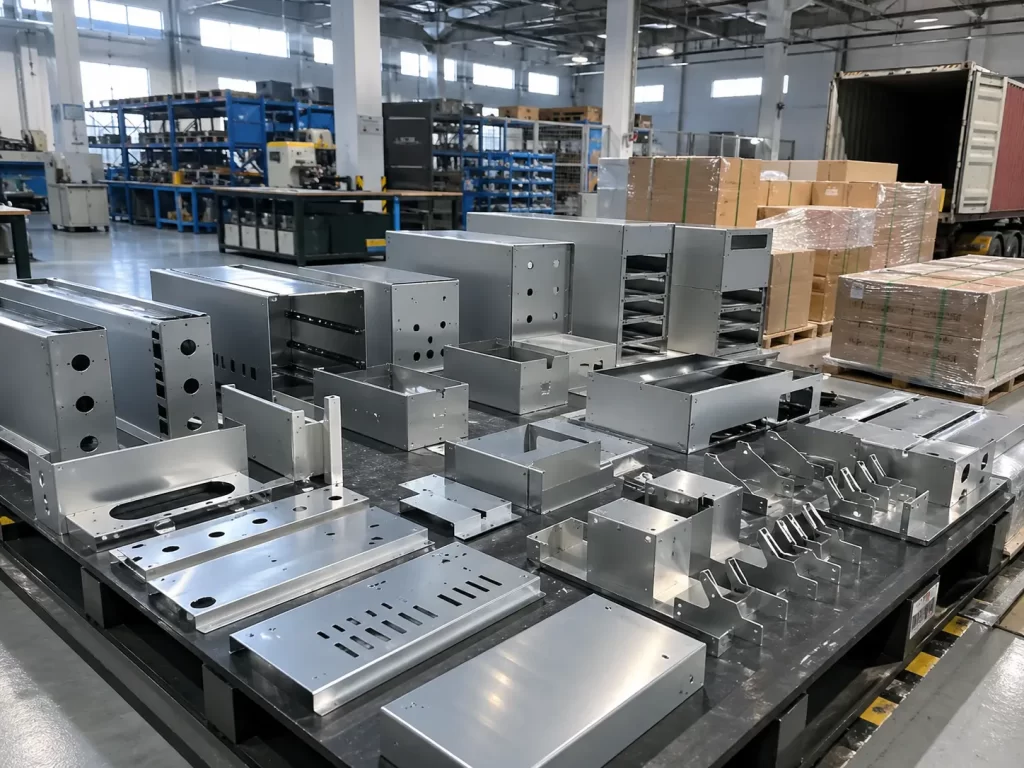
An experienced custom sheet metal fabrication supplier can help OEM customers turn a design into a stable, production-ready product. We can manufacture parts based on 2D drawings, 3D files, or samples, and we support common materials such as stainless steel, aluminum, cold-rolled steel, and galvanized steel.
Our capabilities cover laser cutting, stamping, bending, welding, riveting, grinding, surface finishing, and assembly. But our focus is not only on producing a single part. From prototyping, DFM review, and first article approval to in-process control and final inspection, we help customers reduce the risk of raised areas, deformation, cosmetic defects, and assembly problems.
For enclosures, brackets, housings, panels, mounting plates, equipment parts, and industrial structural components, we aim to support overseas customers with stable manufacturing capability, clear communication, and reliable delivery.