
 Language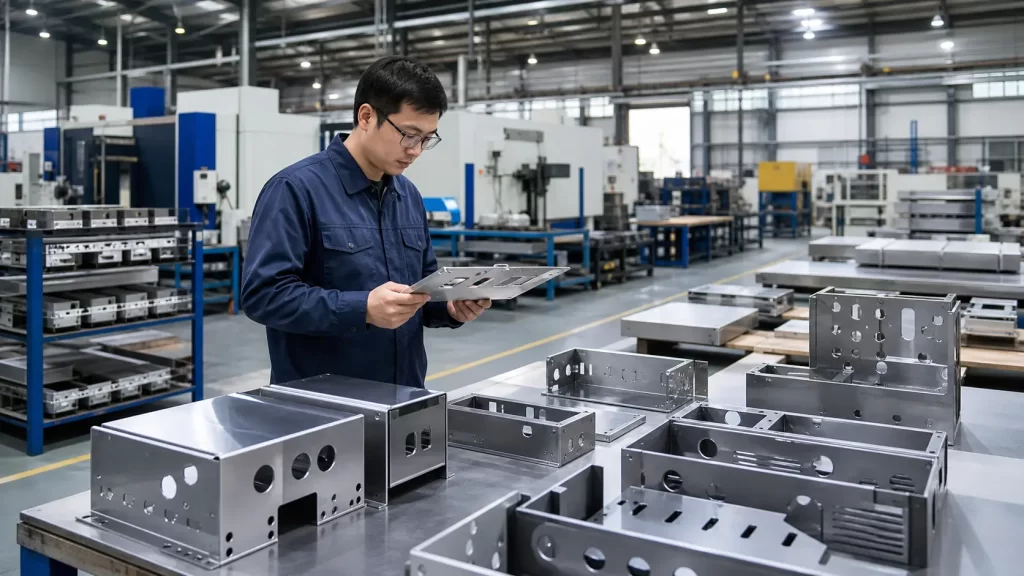
Metal deburring and polishing is the process of removing sharp edges, dross, burrs around holes, raised weld marks, and surface scratches after sheet metal parts have been laser cut, punched, bent, or welded. Although this step usually comes later in production, it has a direct impact on assembly safety, surface finishing quality, and the consistency of mass production delivery.
In overseas OEM sheet metal projects, customers often pay close attention to deburring, edge rounding, surface roughness, and pre-treatment before powder coating. For enclosures, equipment brackets, control panels, and precision sheet metal components, stable edge finishing can directly affect assembly safety, appearance consistency, and the quality of subsequent surface treatments. For this reason, metal deburring and polishing services are often included when customers evaluate a supplier’s manufacturing capability and quality control system.
Key Requirements for Burr and Edge Quality in Overseas OEM Sheet Metal Projects
Overseas buyers focus on metal deburring and polishing mainly to reduce assembly risks. Burrs around holes may affect screw fastening. Sharp edges may damage wires, seals, or nearby components. Raised weld areas may also affect the final appearance after powder coating.
The International Organization for Standardization published ISO 13715:2017, Technical product documentation — Edges of undefined shape — Indication and dimensioning. This standard defines how edge conditions can be indicated and dimensioned on technical drawings. It also shows that edge quality can be controlled through clear drawing requirements, instead of being covered by a vague note such as “deburr all edges.”
I usually suggest confirming visible surfaces, assembly surfaces, functional holes, and exposed edges at the quotation stage. When handling this type of project, Baoxuan Sheet Metal Fabrication also evaluates material thickness, powder coating, electroplating, anodizing, and other follow-up surface treatment requirements together, so later revisions can be reduced as much as possible.
Differences Between Deburring, Polishing, and Edge Chamfering
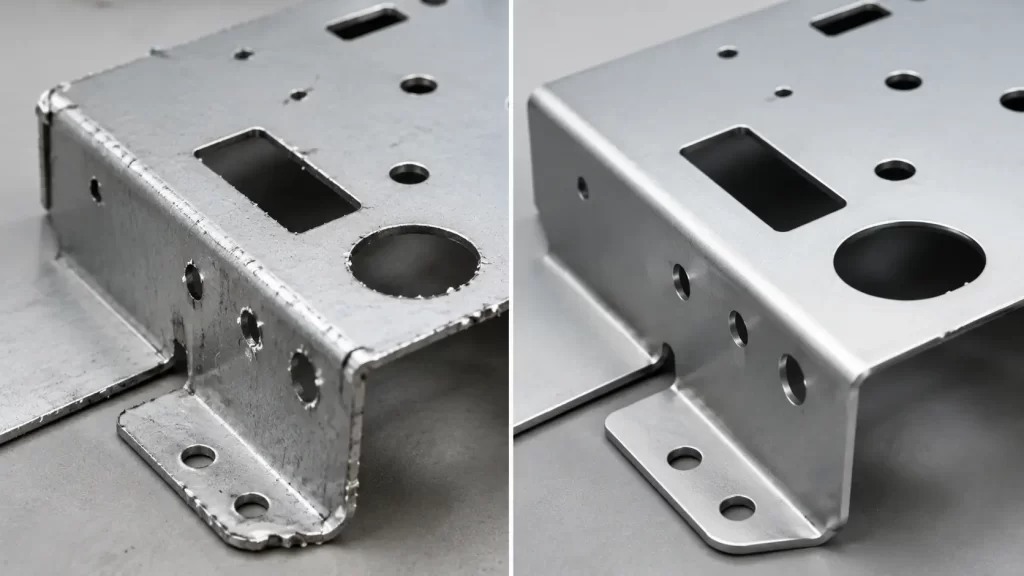
Deburring mainly removes laser cutting dross, punching burrs, and drilling burrs. Polishing focuses more on surface flatness, brushing texture, and overall smoothness. Edge chamfering or edge rounding is mainly used to create safer edges and reduce the risk of cuts, wire damage, or contact damage to adjacent parts.
These requirements should be described separately whenever possible. For example, brushed stainless steel visible parts and internal brackets with basic sharp-edge removal clearly belong to different finishing levels. If the drawing only states “deburr all edges,” the factory can still process the parts, but there will be more room for interpretation, which can easily lead to extra communication later.
Common Deburring and Polishing Methods and Their Applications
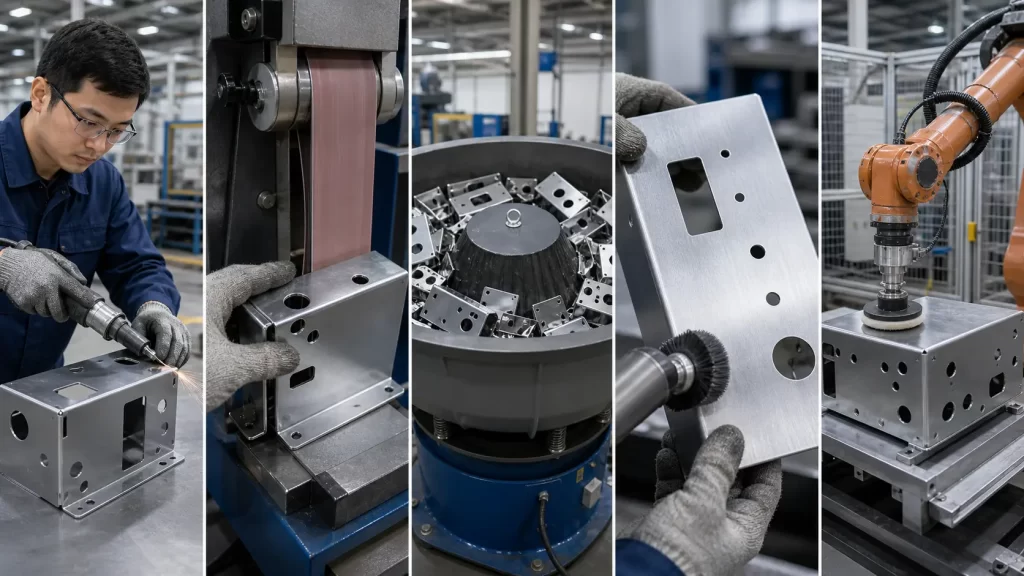
| Process | Suitable Parts | Advantages | Points to Note |
| Manual grinding | Welded parts, irregular parts, small-batch samples | Flexible and suitable for complex corners | Batch consistency depends heavily on operator experience |
| Belt deburring | Flat parts and laser-cut parts | Efficient, with relatively stable surface texture | Limited access to deep cavities and internal holes |
| Vibratory finishing | Small stamped parts and batch hardware components | Suitable for batch processing, with softer edges | Visible surfaces may be scratched or dented |
| Brushing and polishing | Stainless steel panels and visible covers | Clear texture and good visual finish | Brushing direction must remain consistent |
| Robotic polishing | Medium to large batches of repeatable parts | Stable parameters and easier traceability | Higher initial cost for fixtures and process setup |
In recent years, automated deburring, robotic polishing, and visual inspection have become increasingly common. According to the International Federation of Robotics in its World Robotics 2025 report, 542,000 industrial robots were installed in factories worldwide in 2024, marking the fourth consecutive year in which annual installations exceeded 500,000 units.
This trend is also moving sheet metal post-processing away from heavy reliance on manual experience and toward more stable process settings and production records. For overseas OEM sheet metal projects, clear processing parameters, complete inspection records, and traceable production batches help customers better evaluate a supplier’s mass production capability.
Quality Control Points for Metal Deburring and Polishing Services
Good-looking sample photos do not always mean stable batch production. This is especially true for overseas outsourced manufacturing. If burrs, scratches, or dents are discovered only after the goods arrive at the destination, the problem can become difficult and costly to handle.
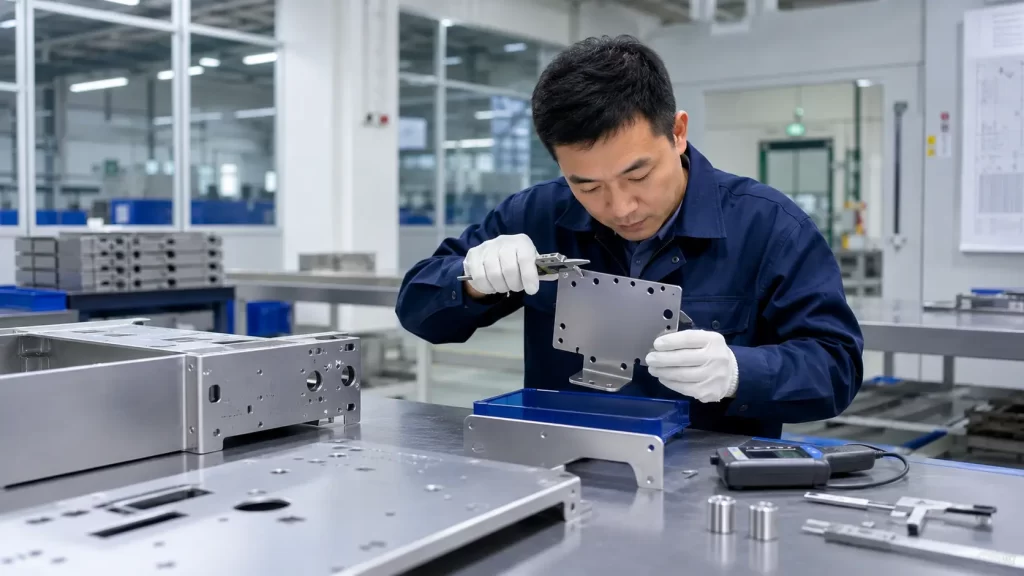
I usually pay attention to the following control points: first article inspection, edge feel checks, burr height spot checks, surface roughness testing, weld grinding confirmation, protection of visible surfaces, and scratch-resistant packaging. When Baoxuan Precision Manufacturing handles export sheet metal parts, batch records and packaging methods are also reviewed together. To be honest, it is a real pity when parts are polished well in production but get scratched during transport.
Edge and Surface Requirement Confirmation Before OEM Sheet Metal Prototyping
Metal deburring and polishing requirements should be considered before production reaches the final finishing stage. Hole positions, bend radii, weld locations, and visible surface directions can all affect the finishing method. If an internal corner is too deep, a belt tool may not be able to reach it. If a hole is too close to a bend line, deformation after bending may make later deburring less effective.
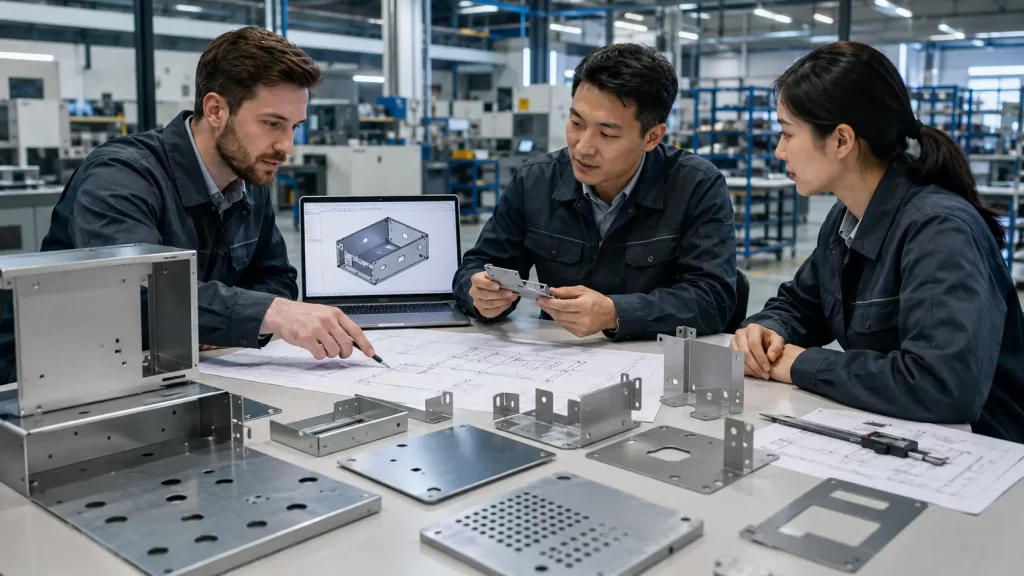
Buyers are advised to provide two-dimensional drawings, three-dimensional models, material grades, surface treatment requirements, visible surface markings, and estimated annual volume in advance. Before prototyping, Baoxuan Metal Fabrication reviews the process and identifies which edges need rounding, which areas must not be over-polished, and which surfaces require protective film.
FAQ
How should overseas OEM sheet metal buyers choose a metal deburring and polishing supplier?
Buyers can check whether the supplier understands edge finishing requirements, supports first article approval, performs batch inspection, carries out pre-surface-treatment checks, and can provide practical suggestions for improving manufacturability.
What records are needed for metal deburring and polishing quality control?
Recommended records include first article inspection, visual inspection, edge rounding confirmation, surface roughness testing, packaging photos, and batch traceability information.
What is the difference between deburring and polishing?
They are related, but the focus is different. Deburring removes sharp edges and excess metal. Polishing focuses more on surface appearance, smoothness, and texture consistency.
Do all sheet metal parts need high-level polishing?
No. Internal brackets usually only need sharp-edge removal. Visible panels, medical equipment enclosures, and communication equipment housings usually require higher surface consistency.
Will deburring and polishing affect part dimensions?
Light deburring usually has little effect on dimensions. However, chamfering, weld grinding, and excessive polishing may affect functional edges. Critical areas should be clearly defined on the drawing.
Stable Surface Finishing Supports Reliable Overseas Project Delivery
The value of metal deburring and polishing services lies in assembly safety, surface treatment quality, and delivery stability. For overseas OEM sheet metal projects, the earlier edge and surface requirements are confirmed, the smoother the later production process will be.
If you are evaluating a sheet metal fabrication supplier, you can provide the drawings, materials, surface treatment requirements, and batch production plan for review. Together, we can identify which edge and surface details should be controlled before production starts.
