
 Language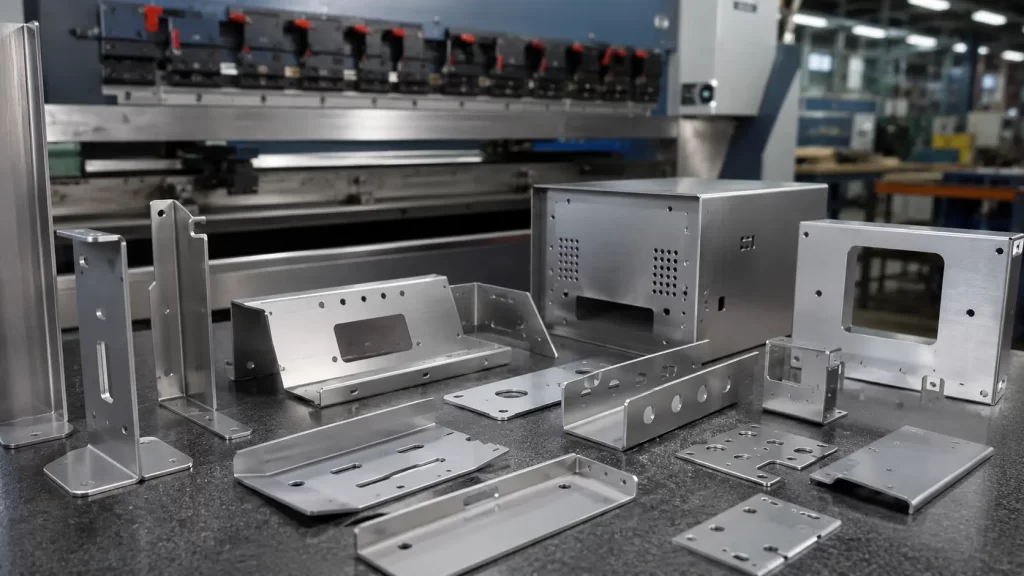
CNC Sheet Metal Bending Starts with the Drawing, Not the Price
CNC sheet metal bending is a forming process that uses a press brake and dedicated tooling to bend cut metal sheets into specified angles, flanges, channels, enclosures, brackets, or structural components. At first glance, it may look like a simple process of pressing a sheet into shape. In real production, however, the final result is affected by material thickness, hardness, bend radius, springback, hole-to-bend distance, tooling clearance, and possible interference during forming.
Many customers start an inquiry with a direct question: “How much will this batch cost?” Of course, the price can be estimated, but the drawing has to be reviewed first. A simple L-shaped bracket and a formed equipment housing with PEM fasteners, welding, and powder-coated cosmetic surfaces may look similar in size, yet the manufacturing cost can be very different.
When Baoxuan Sheet Metal receives an outsourced fabrication project, we usually review the drawings, material, quantity, tolerances, surface finish, and delivery schedule before deciding the production route. This helps keep the quotation closer to the actual manufacturing cost.
What Mainly Affects a Sheet Metal Bending Quote
A CNC bending quote is usually built from several cost items, including material, laser cutting, bending, riveting or press-fit fasteners, welding, grinding, surface finishing, packaging, and shipping. For custom sheet metal parts, bending sequence and assembly requirements are often underestimated.
If a part has multiple bends, the engineer needs to decide which bend should be formed first and which should come later. The part may collide with the tooling after one bend is completed, or a short flange may not sit firmly against the back gauge. A design that looks simple on screen may require tooling changes, flat pattern adjustment, or even structural modification at the machine.
For a more accurate quotation, it is best to provide:
- 2D engineering drawings
- 3D files
- Material grade
- Sheet thickness
- Order quantity
- Surface treatment requirements
- Key dimensional tolerances
If only sample photos are available, a preliminary estimate can still be made. The accuracy will be lower, and that should be made clear at the beginning.
Bend Radius and Minimum Flange Length Affect Feasibility
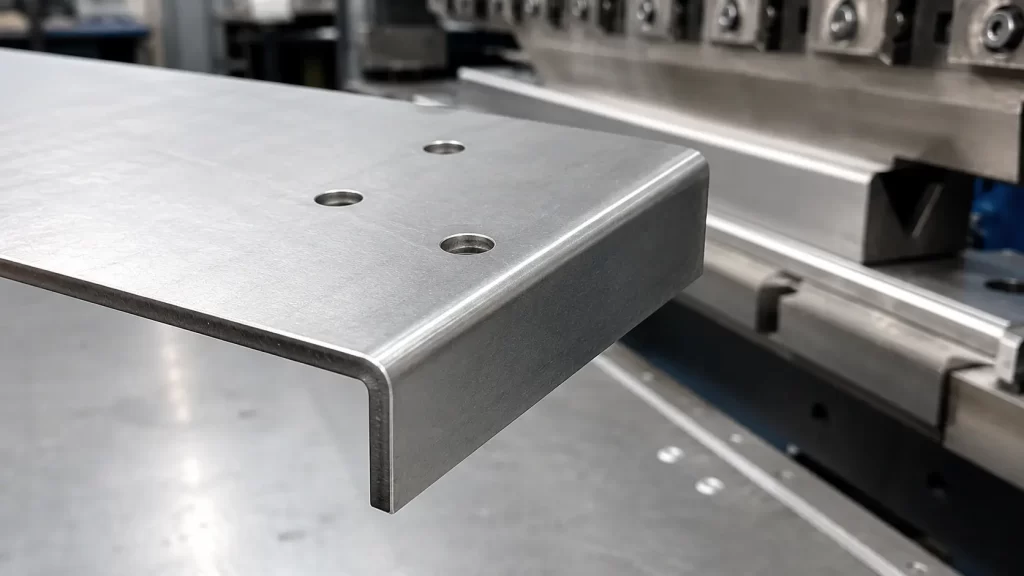
In CNC sheet metal bending, bend radius, V-die opening, and minimum flange length directly affect whether a part can be formed reliably. If the flange is too short, the machine may not hold it properly. If a hole is too close to the bend line, the hole may stretch or deform during bending.
According to Xometry Pro’s sheet metal bend radius reference, when bending approximately 4 mm structural steel at 90 degrees, the recommended V-die opening may fall around 20–50 mm, the minimum flange length around 14–35 mm, and the achievable bend radius around 3.3–8 mm. These values should not be copied blindly into every project, but they clearly show one thing: a bending design needs enough room for material deformation.
When Baoxuan Precision Manufacturing reviews custom bent parts, we usually flag risks such as flanges that are too short, holes placed too close to bend lines, deep-channel interference, or possible marking on cosmetic surfaces. This may add a little discussion time at the quoting stage, but it can greatly reduce the chance of failed samples later.
Different Bending Solutions Fit Different Parts
| Manufacturing Solution | Suitable Products | Advantages | Key Considerations |
| Standard CNC bending | Brackets, covers, simple flanged parts | Stable cost and relatively fast lead time | Complex parts may need bending sequence review |
| Precision CNC bending | Cabinet doors, equipment panels, assembly parts | Better angle control and dimensional consistency | Requires clearer tolerances and suitable tooling |
| Multi-bend forming | Enclosures, frames, custom-shaped parts | Can reduce some welding operations | Tooling interference and accumulated springback must be managed |
| Bending with welding | Equipment housings, structural brackets | Suitable for complete fabricated assemblies | Welding distortion and grinding quality need control |
| Bending with press-fit fasteners | Electrical boxes, mounting plates, connector parts | Improves assembly efficiency | Fastener holes must avoid bend-affected areas |
Choosing a process should not depend on unit price alone. Cosmetic parts require attention to surface marking. Assembly parts require stable hole positions and reference edges. Outdoor parts also need corrosion protection. When the application is clearly explained, the factory can recommend a process plan that better matches real production.
Why the Same Drawing Can Receive Different Prices
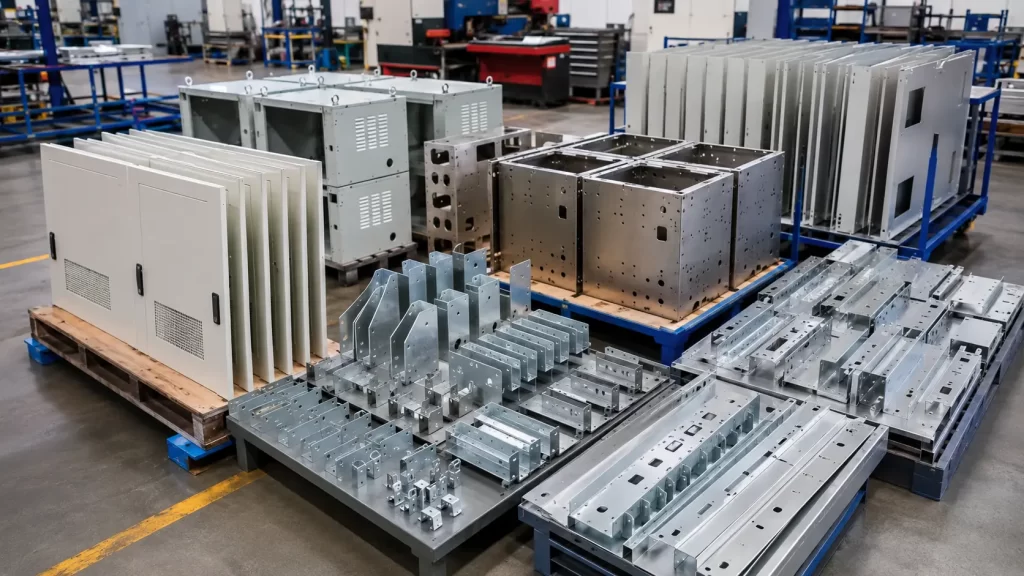
It is common for the same drawing to receive different quotes from different suppliers. The difference may come from material sourcing, machine efficiency, labor time, inspection standards, and packaging methods. A cheaper quote may only cover basic fabrication, without considering trial assembly, gauges, surface protection, or transport packaging.
Tolerance requirements also affect the price. According to the ISO 2768-1:1989 general tolerance table, for linear dimensions over 30 mm and up to 120 mm, the medium tolerance class allows ±0.3 mm. For dimensions over 120 mm and up to 400 mm, the medium tolerance class allows ±0.5 mm. If tighter inspection is expected, it should be clearly stated on the drawing. Otherwise, production and acceptance standards can easily become inconsistent.
Baoxuan Metal Fabrication usually confirms critical dimensions during the quotation stage, such as mounting hole spacing, door gaps, bend angles, cosmetic surface direction, and packaging requirements. A price may look like a simple number, but behind it are process judgment and risk control.
How to Get a Custom Quote Faster
To get a faster quote for sheet metal bending, it helps to send complete information in one inquiry. If the drawing comes first, the quantity changes later, and the material is updated again after that, the communication cycle becomes longer than necessary.
A smoother inquiry usually includes the product application, drawing files, material, order quantity, required lead time, and quality requirements. For example, an equipment enclosure, cabinet door, mounting bracket, automotive component, medical device bracket, or solar mounting part will each have different manufacturing priorities.
In recent years, more sheet metal manufacturers have adopted 3D unfolding, offline programming, bending simulation, and angle compensation systems. Complex enclosures can be checked for interference before production. Batch parts can be manufactured with stored programs and process sheets, which improves consistency compared with fully manual setup.
ISO 7438:2020 also defines test methods for the bend performance of metallic materials. This type of standard reminds us that material behavior matters. Springback, cracking, and forming stability all depend on more than just the shape shown in the drawing.
FAQ
What information is needed for a CNC sheet metal bending quote?
It is best to provide 2D drawings, 3D files, material grade, sheet thickness, quantity, surface finish, and tolerance requirements. The more complete the information, the closer the quote will be to the real production cost.
Why is small-batch custom sheet metal bending more expensive per piece?
Small-batch production still requires flat pattern development, programming, machine setup, tool changes, and first article inspection. When the quantity is low, these preparation costs are spread across fewer parts, so the unit price becomes higher.
What happens if holes are too close to the bend line?
The holes may stretch, distort, or shift during bending, which can affect assembly. It is better to leave enough distance during design or ask the manufacturer to review the structure before production.
Can CNC bending keep every angle consistent?
CNC bending improves consistency, but material batch variation, sheet thickness tolerance, and springback can still affect the final angle. For critical parts, first article approval and in-process inspection are recommended.
How can I judge whether a sheet metal bending supplier is suitable for long-term cooperation?
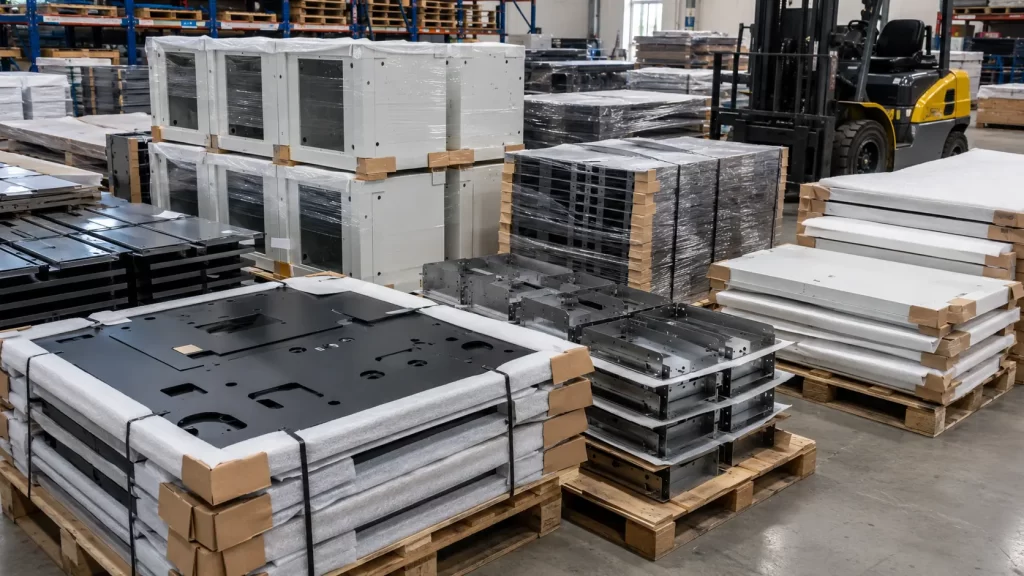
Look at whether the supplier gives clear quotations, identifies process risks, provides practical manufacturing suggestions, supports related processes such as cutting, bending, welding, and finishing, and has proper inspection and packaging procedures.
Final Thoughts
A CNC sheet metal bending quote should not be judged by unit price alone. Drawing quality, material, structure, process requirements, and delivery expectations all affect the final solution. If you have equipment housings, cabinet doors, mounting brackets, or other custom sheet metal parts ready for outsourcing, it is worth preparing the drawings and quantity details before contacting Baoxuan.
Early process review can prevent many problems later. In sheet metal manufacturing, that simple step often saves more time than people expect.
