
 Language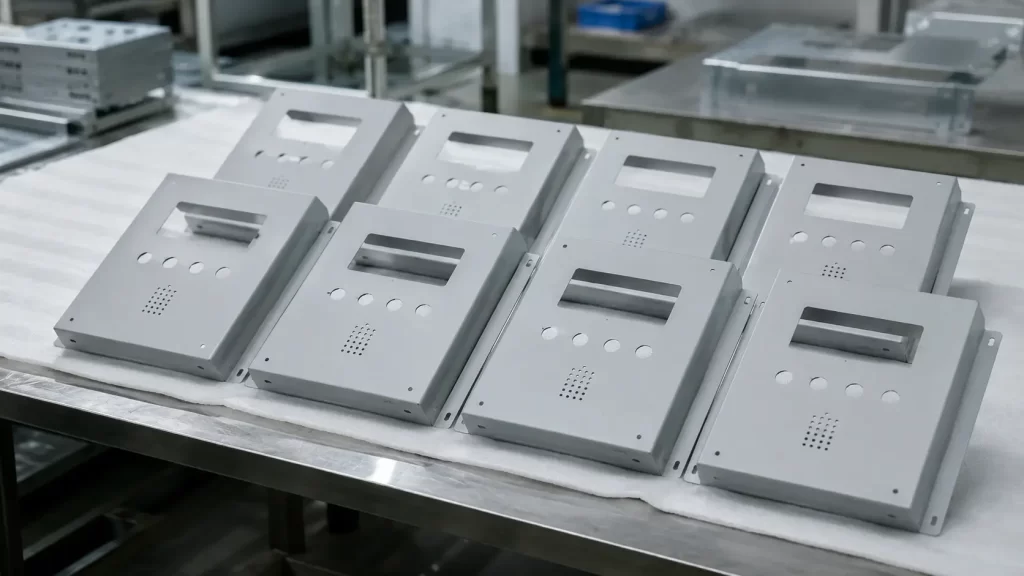
Basic Quotation Requirements for Custom CNC Punched Metal Panels
Custom CNC punched metal panels are commonly used for equipment panels, control panels, enclosure doors, instrument housings, and other sheet metal components. In most cases, the CNC punching process is used to create holes, cutouts, and local formed features on the panel. Whether additional processes are required depends on the structure of the part and how it will be assembled.
Although a panel may look like a simple flat part, quoting it properly requires more than checking the outside dimensions. The material has to be suitable, the hole positions must be practical for stable production, and the surface requirements may affect both manufacturing and delivery.
When customers send us drawings, they often ask directly, “How much is this part?” That is a reasonable question, especially when purchasing teams need to estimate the project cost early. From a manufacturing point of view, however, if the basic information is still incomplete, we can only provide a rough price range. When we handle this type of enclosure or panel project, we usually review the structure first, then evaluate the production route and any delivery risks. This makes the later prototyping and batch production stages much smoother.
Drawing Files and Structural Information
For sheet metal panel quotations, clear drawings make the communication process much easier. A PDF drawing is useful for checking dimensions, notes, tolerances, and general technical requirements. DXF or DWG files are more suitable for reviewing the flat pattern and checking whether the hole layout is suitable for processing.
If the part includes bends, rear-side mounting features, or assembly-related structures, a STEP file is especially helpful. It allows the manufacturer to check the front and back sides, bending direction, and possible interference with other components.
Some customers send screenshots or photos for an initial inquiry. This is fine for a quick review, but it is usually not enough for an accurate quotation. For example, if a control panel has openings for a display, switches, and mounting points, but the drawing does not show which areas are cosmetic surfaces or which holes are used for assembly, problems may appear later. The fit may become too tight after finishing, or some positions may need rework. Confirming these details before quoting may seem slower at first, but it usually reduces rework later.
Material Specification and Thickness
Panel material should not be selected by name only. It also needs to match the actual working environment. For general equipment panels, cost and surface finish are usually important. For equipment used in cleaner or more corrosive environments, corrosion resistance and ease of maintenance become more important. For lightweight panels, the balance between weight, rigidity, and surface protection has to be considered.
Material thickness also affects the quotation. When the sheet becomes thicker or thinner, the punching quality, bending behavior, fastening method, and packaging requirements may all change. When we review these projects, we usually consider the material together with the application. A cosmetic panel needs good surface protection, while a mounting panel needs enough strength. Areas with dense features also need to be checked for possible deformation after processing.
Simply writing “steel” or “aluminum” is usually not enough. It is better to provide the material grade, thickness, and any surface condition requirements at the beginning of the inquiry.
Hole Layout, Cutouts, and Formed Features
CNC punching is well suited for regular hole patterns and certain formed features. If a panel has repeated hole types and a reasonable production quantity, punching can often be an efficient choice. If the outer profile changes frequently, or if only a few samples are needed, other cutting methods may also be used together with punching.
When quoting, the number of holes is not the only point to check. The manufacturer also needs to see whether the holes are too close to the edge, whether they are near a bend area, and whether the later assembly will be affected. For example, if a hole is too close to a bend, the edge may stretch slightly after forming. If a small hole is used for a fastener, button, or electrical component, the final surface finish may also make the fit tighter.
At Baoxuan Sheet Metal, we pay close attention to positions that may affect assembly. These areas are often small on the drawing, but they can create real problems during installation.
Bending, Fastening, and Assembly Structure
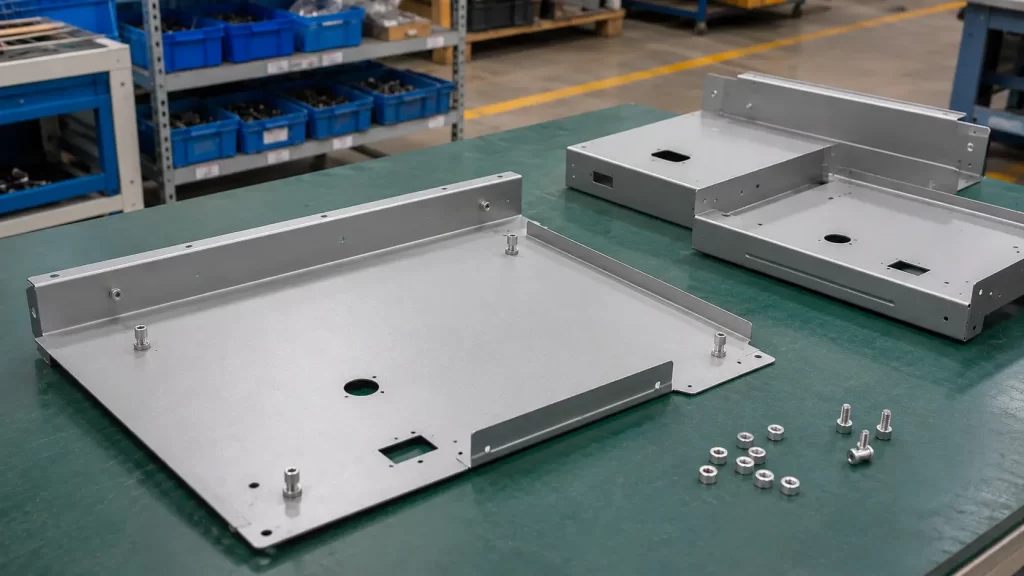
Many metal panels look flat from the front, but the rear side may include bends, fastening points, or mounting structures. If a quotation only considers the front view, later supporting processes may be missed. This often happens with equipment panels, control box doors, and instrument enclosure parts, especially when only a front-view drawing is provided.
For bent structures, the bending direction and available space need to be checked early. The cosmetic surface is also important, because it should not be judged only after the sample has already been made. For fastening structures, the material thickness and edge distance must be suitable. If the sheet is too thin or the feature is too close to the edge, the fixing strength may be affected.
When we evaluate panel parts, we usually review the punched features and assembly relationship together. The size or position created in one process often affects the final installation result.
Surface Finish and Appearance Requirements
Surface finish requirements should be clarified before quotation. If the inquiry only says “black surface,” the manufacturer still needs to know whether it means powder coating, painting, anodizing, or another finish. If there is a color sample, texture requirement, gloss level, or marking content, it should also be provided before quoting.
Surface treatment can also affect assembly. Coating thickness may reduce the effective size of small holes or slots. Brushed or exposed-metal cosmetic surfaces need proper grain direction and surface protection. If the part requires electrical grounding, certain areas may need to remain conductive.
For cosmetic metal panels, Baoxuan Precision Manufacturing usually suggests marking the visible surface, non-visible surface, and masking areas clearly on the drawing. This helps the finished part match the actual use condition more closely.
Quantity, Lead Time, and Packaging Requirements
The quotation method for samples and batch production is different. Sample production is closer to process verification. The manufacturer needs to prepare the program, set up the machine, and confirm the first piece. For batch production, the focus shifts to stable output, material utilization, and process control.
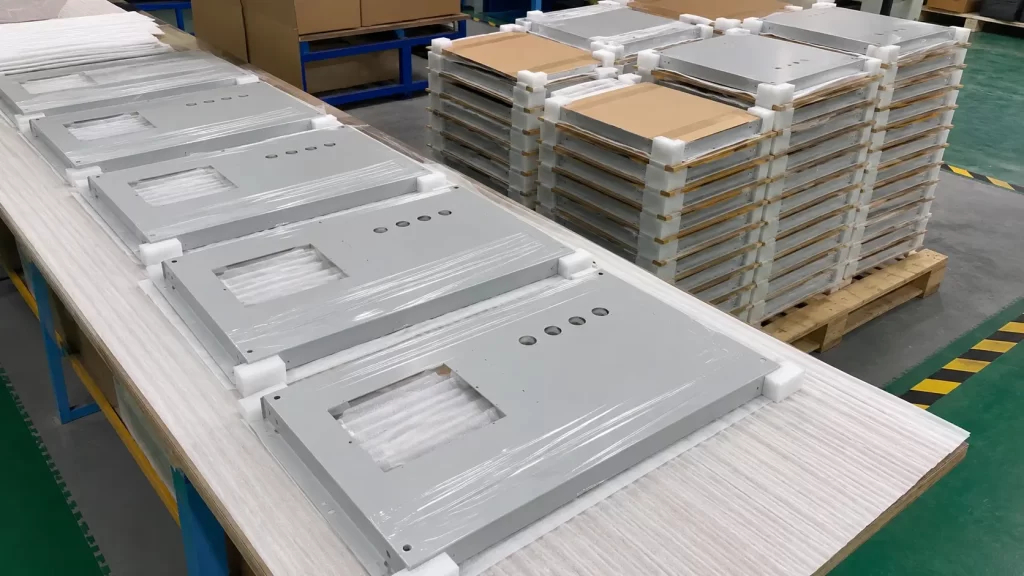
Lead time also affects the quotation. A normal schedule and an urgent order are handled differently in production planning. If the part requires surface finishing or outsourced processing, additional time should be allowed. Packaging should not be ignored either. Cosmetic panels usually need scratch protection, and batch shipments also need protection against dents and deformation.
It is always a pity when the part is made correctly but gets damaged during transportation. For this reason, packaging requirements should be discussed together with the quotation, especially for finished panels with visible surfaces.
Completeness of Quotation Information and Manufacturing Review
To receive a more accurate quotation for custom CNC punched metal panels, it is best to prepare the drawings, material requirements, purchasing plan, surface finish, and packaging method in advance. If the panel has assembly-related features, the installation position, key holes, and working environment should also be explained.
For buyers, these early checks may look detailed, but they can reduce drawing revisions, hole modifications, rework, and repeated quotations. For the manufacturer, identifying production risks during the quotation stage helps make prototyping and batch production more stable.
If you have a similar sheet metal panel project, you can first prepare the drawings and estimated quantity, then ask the manufacturer to review the structure based on the actual processing requirements. Many potential issues can be identified before the quotation is finalized.
