
 Language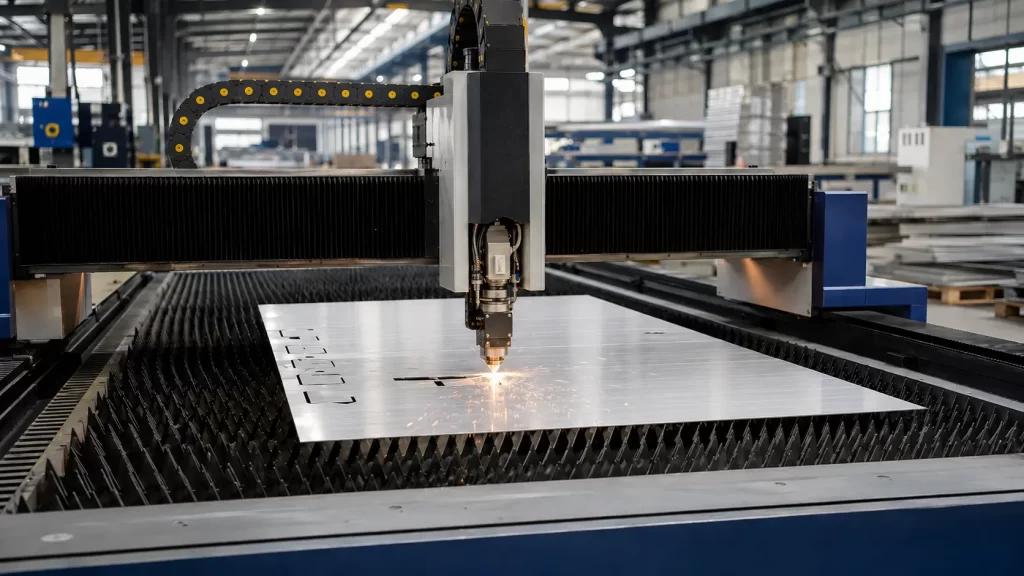
Overview of Custom Laser-Cut Aluminum Enclosures
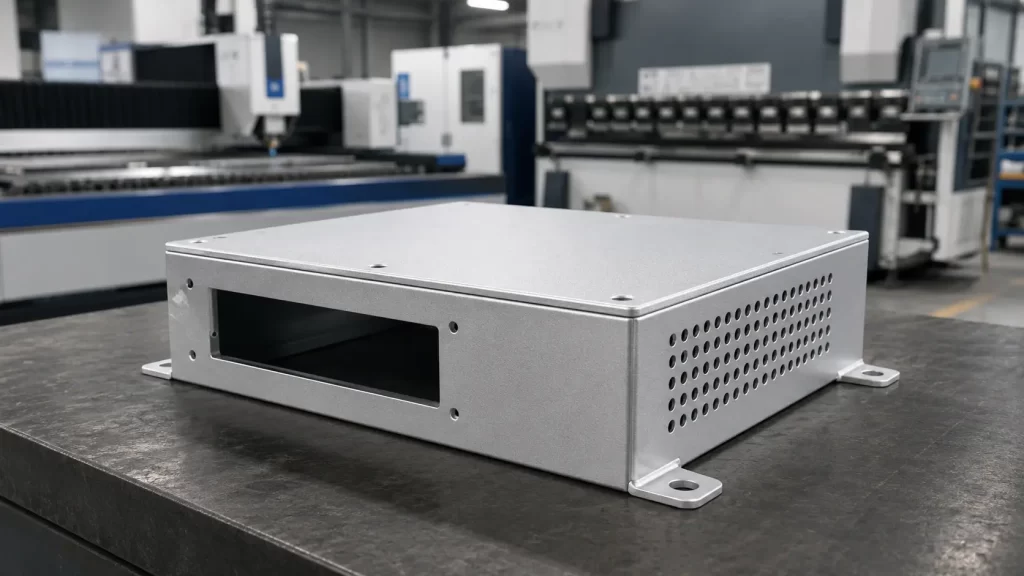
Custom laser-cut aluminum enclosures are sheet metal components made through laser cutting, bending, PEM hardware installation, welding, and surface finishing. They are widely used as equipment housings, electronic enclosures, instrument cases, and control box covers. Although they may look like simple outer shells, many details can affect the final quotation.
Many buyers start an inquiry by sending a product photo or a rough appearance drawing and asking, “How much would this cost?” That is understandable, especially at the early stage of a project when the budget is still being estimated. From a manufacturing perspective, though, if the drawing information is incomplete, the quote can only be approximate. At Baoxuan Sheet Metal Fabrication, we usually confirm the material, thickness, structure, surface finish, and order quantity first, then evaluate the most suitable fabrication process.
Aluminum Grade, Thickness, and Structural Strength Requirements
Common aluminum grades for enclosures include 5052 and 6061. Aluminum 5052 offers good bending performance and is often used for equipment covers, control box housings, and panel-type sheet metal parts. Aluminum 6061 provides higher strength and better rigidity after machining, but the risk of cracking during bending needs to be evaluated in advance.
One key reason aluminum is widely used for enclosures is its weight advantage. According to information from the U.S. Geological Survey, aluminum weighs about one-third as much as steel or copper. For instruments, communication equipment, and mobile devices, this weight reduction can be highly valuable.
Sheet thickness should also be confirmed early. A 1.5 mm aluminum enclosure is relatively lightweight and suitable for small electronic devices. Thicknesses from 2.0 mm to 3.0 mm are more common for industrial equipment housings. When the material gets thicker, the bending radius, welding distortion, and PEM hardware method all need to be reviewed again. In many projects, I usually suggest that buyers provide at least a tentative thickness range. Even a preliminary range is much better than leaving it blank.
Drawing Files, Hole Tolerances, and Assembly Information
A quotation for an aluminum enclosure should not be based only on length, width, and height. Hole positions, connector cutouts, ventilation slots, bending direction, PEM nuts, visible surfaces, and assembly surfaces can all affect the manufacturing cost.
Ideally, buyers should provide both 2D drawings and 3D files. The drawing should clearly indicate the aluminum grade, sheet thickness, critical tolerances, surface finish, and cosmetic requirements. If the enclosure will be assembled with a PCB, fan, display screen, or wiring terminal, the mounting hole positions must be accurate. Once these positions are off, the final assembly can become difficult, and rework is rarely pleasant.
Some customers only have sample photos at the beginning of a project. That is also workable, but photos can only help us understand the structure. They cannot replace actual dimensions. At Baoxuan Precision Manufacturing, we usually review the structural risks first and then ask the customer to provide the key missing dimensions. It may feel like a few extra questions at the start, but it often makes sampling faster later.
Laser Cutting, Bending, and Surface Finishing Process
Laser cutting determines the outer profile and hole quality. Bending determines the formed shape of the enclosure. If welding, grinding, PEM insertion, or powder coating is required afterward, each process will affect the final assembly result.
TWI’s technical information on laser cutting notes that inert assist gases such as nitrogen or argon are commonly used for aluminum, stainless steel, titanium, and other oxidation-prone alloys to achieve a cleaner cut edge. For aluminum enclosures that will later receive anodizing, cut-edge quality and surface scratches require closer attention because many marks become more visible after anodizing.
In recent years, many sheet metal factories have been using fiber laser cutting, offline programming, and bending simulation to reduce trial-and-error. For complex enclosures, checking the flat pattern before sampling can reduce the risk of hole misalignment and bending interference. Software cannot replace manufacturing experience, of course, but it can help avoid wasting a few sheets of material. That part is very practical.
Comparison of Common Fabrication Solutions
| Fabrication Solution | Suitable Products | Key Control Points |
| Laser cutting + bending + powder coating | Industrial equipment covers, control boxes | Powder coating thickness and assembly clearance |
| Laser cutting + bending + anodizing | Instrument enclosures, electronic housings | Scratches, weld marks, and surface consistency |
| Laser cutting + PEM hardware assembly | Small module enclosures | Matching PEM hole size with sheet thickness |
| Laser cutting + welding and grinding | Medium and large aluminum covers | Welding distortion and ground surface appearance |
If the enclosure is a cosmetic part, I usually recommend confirming a surface sample in advance. For powder coating, the color code and gloss level should be checked. For anodizing, the material condition and surface appearance need to be confirmed. Color issues are much easier to handle during the sample stage than during mass production.
Main Cost Factors and Batch Quantity Evaluation
The price of a custom laser-cut aluminum enclosure is usually related to material cost, laser cutting time, bending operations, welding and grinding, PEM hardware, surface finishing, inspection, and packaging. Sample pricing is often higher because programming, machine setup, and first article inspection must be included.
Batch quantity also affects unit cost. Once the quantity becomes stable, material utilization and production efficiency usually improve, which may reduce the unit price. If buyers can provide the sample quantity, pilot-run quantity, and expected monthly demand, Baoxuan Metal Fabrication can break down the quotation more clearly.
Lead time should also be discussed early. Urgent orders can affect production scheduling, and surface finishing may involve batch processing or outsourced finishing schedules. For long-term projects, it is better to mention the expected purchasing rhythm during the quotation stage.
Dimensional Inspection, Cosmetic Control, and Packaging Requirements
Inspection points for aluminum enclosures usually include hole dimensions, bending angles, diagonal dimensions, flatness, PEM hardware strength, and surface appearance. Standard tolerances may be acceptable for ordinary covers, while critical assembly holes should be specified separately.
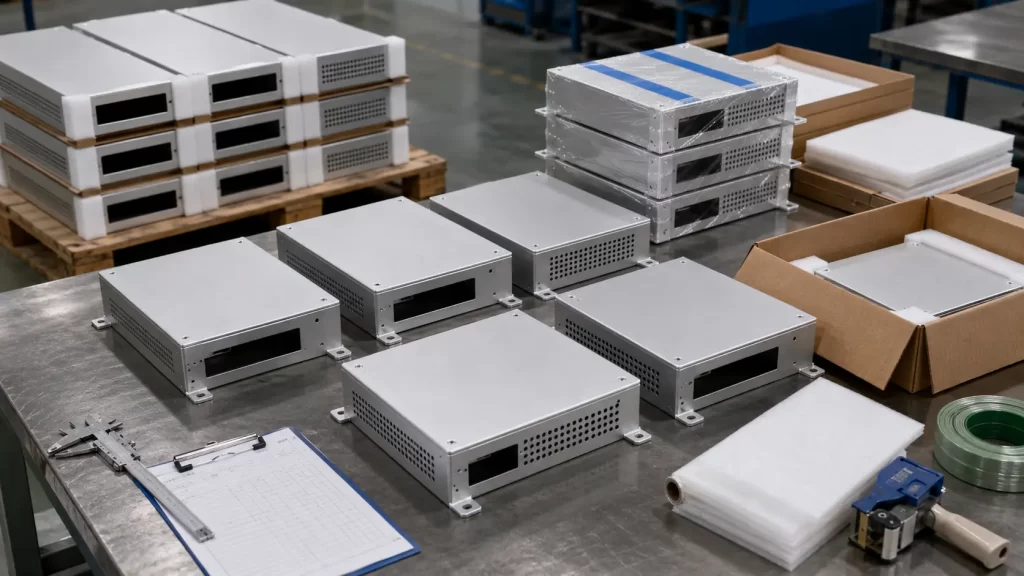
Packaging should not be ignored either. If the aluminum enclosure has visible surfaces, protective film, foam, or separators are recommended. A scratch during shipping can cost more to fix than proper packaging would have cost in the first place. That kind of problem is simply not worth it.
If the enclosure will be assembled into a complete machine, it is best to provide information about the mating parts. This may include PCB dimensions, fan specifications, display cutouts, and connector positions. Without this information, the factory can only manufacture according to the drawing, and interference may appear during final assembly.
FAQ
What should be provided before requesting a quote for custom laser-cut aluminum enclosures?
It is best to provide 2D drawings, 3D files, aluminum grade, sheet thickness, surface finish, quantity, and application details.
What should buyers pay attention to when ordering small-batch aluminum equipment enclosures?
For small-batch orders, buyers should focus on manufacturability, surface finish samples, and packaging requirements.
Is 5052 or 6061 better for aluminum enclosures?
5052 is more suitable for bent sheet metal enclosures. 6061 has higher strength and is better for parts requiring more rigidity, but bending risks should be reviewed in advance.
How should buyers choose between powder coating and anodizing?
Powder coating is suitable for industrial equipment covers and offers more color options. Anodizing is often used for instrument enclosures and electronic housings where a metallic appearance is preferred.
Can mass production start immediately after the sample is approved?
Mass production preparation can begin, but the drawing version, inspection standard, surface finish sample, and packaging method should be confirmed first.
Conclusion
When purchasing custom laser-cut aluminum enclosures, the price is closely related to material, thickness, structure, cosmetic requirements, quantity, and lead time. The clearer the parameters are, the more accurate the quotation will be, and the closer the sample will be to the final production version.
If you have aluminum enclosure drawings, sample photos, or an equipment housing project under development, you can send them to Baoxuan Sheet Metal Fabrication for review. Even if the drawing is not complete yet, we can first check the key structures and then help clarify the missing details step by step. That usually makes the whole project much more stable.
