
 Language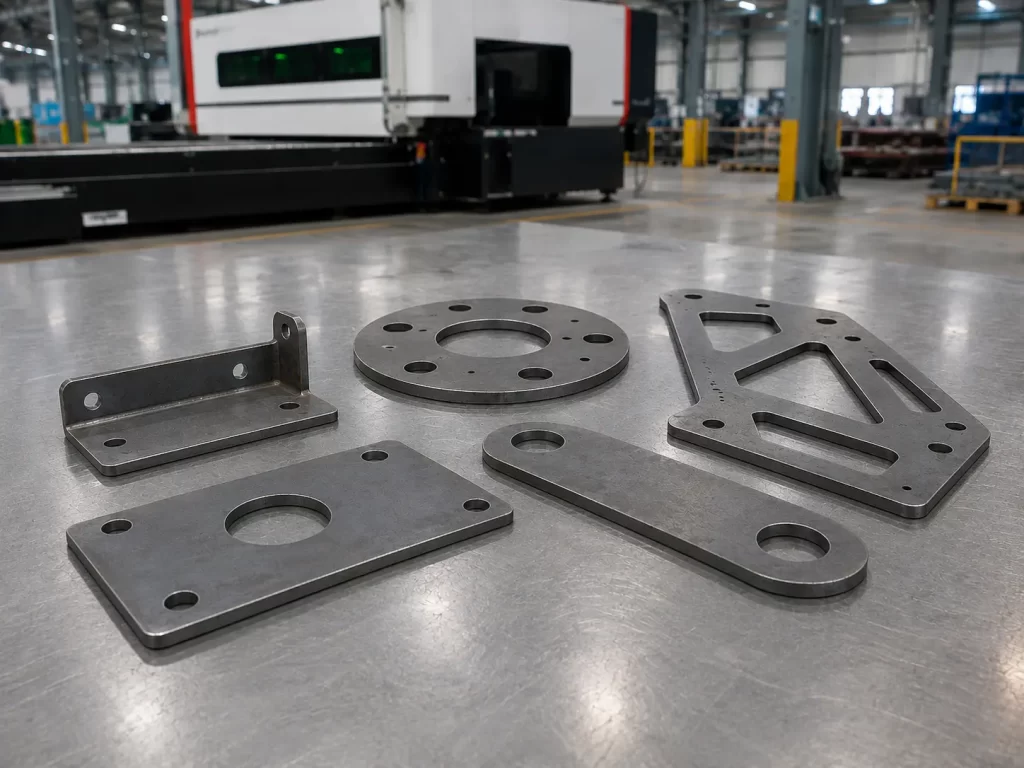
Laser cutting has become a widely used precision process for carbon steel components. Once plate thickness exceeds 6 mm, factors such as laser power, focal position, assist gas, and cutting speed have a much greater impact on final cut quality.
For engineers sourcing thick carbon steel parts, selecting the right material and process parameters can help reduce dross, burrs, dimensional variation, and heat-related distortion.
This guide covers laser cutting of 10–50 mm carbon steel plate, including equipment power, material selection, common cutting defects, design recommendations, tolerances, and RFQ preparation.
What Is Thick Carbon Steel Laser Cutting?
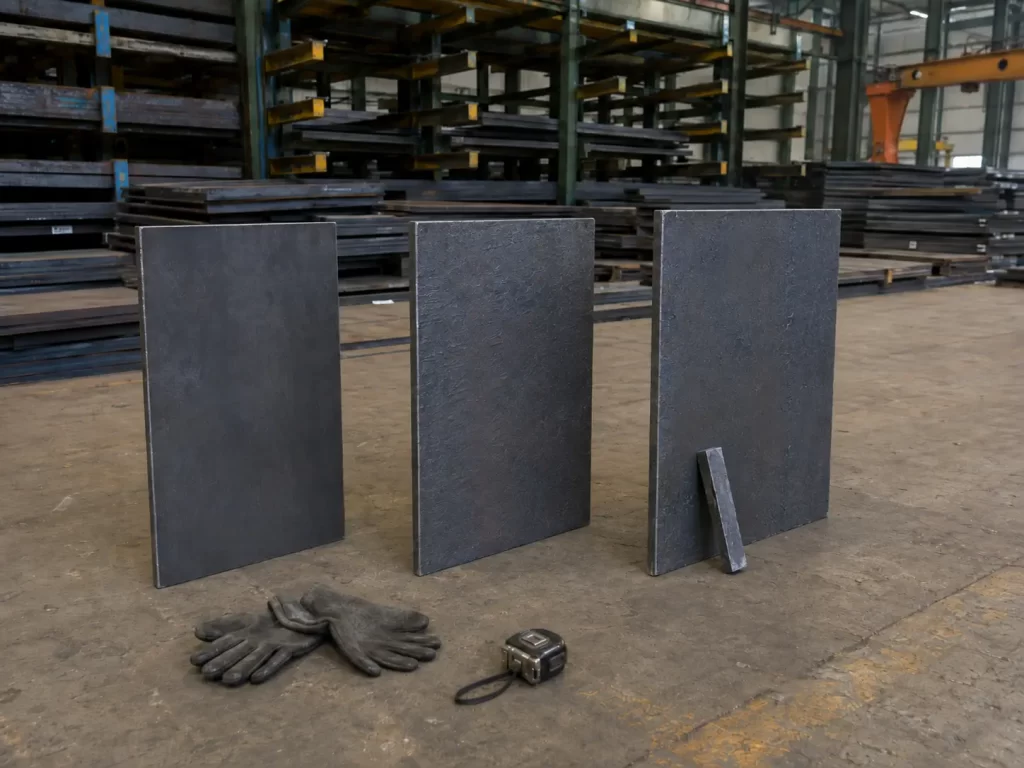
In laser cutting applications, carbon steel plate 6 mm thick or greater is generally considered medium or thick plate.
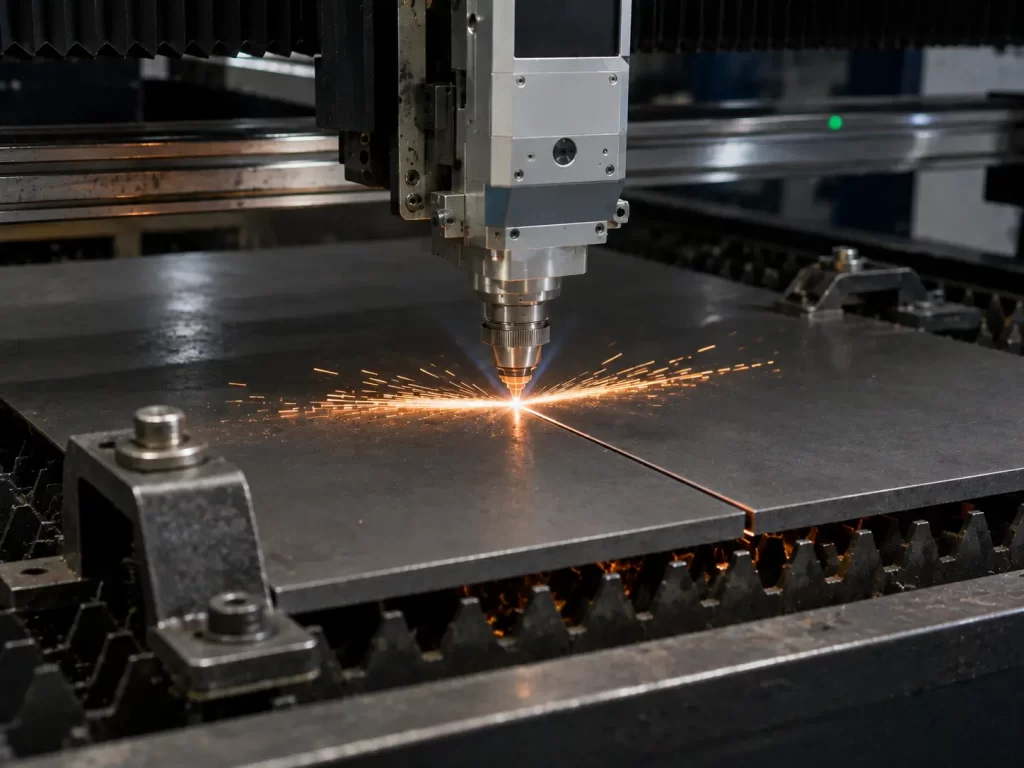
Compared with traditional CO₂ laser systems, modern fiber lasers offer higher power density and generally require less maintenance. As a result, they are increasingly used for cutting thicker carbon steel plate.
Typical 6–12 kW fiber laser systems can process carbon steel up to approximately 25–30 mm thick. Higher-power systems, when properly configured, can also handle selected applications in the 40–50 mm range.
However, a machine’s maximum cutting thickness is not necessarily its most practical production thickness. As plate thickness increases, cutting speed, edge quality, and processing cost become increasingly important considerations.
Key Parameters for Thick Carbon Steel Laser Cutting
Laser Power
Different plate thicknesses require different laser power levels.
| Carbon Steel Thickness | Typical Laser Power |
| 6–12 mm | 3–4 kW |
| 12–25 mm | 6–10 kW |
| Above 25 mm | 10–12 kW or higher |
These values are general references only. Actual cutting capability also depends on the machine configuration, material condition, assist gas, and required edge quality.
Focal Position
For thick carbon steel, the focal position normally needs to be adjusted according to plate thickness so that laser energy is delivered effectively into the material.
Incorrect focus settings can lead to bottom-edge dross, incomplete penetration, or excessive kerf taper. For this reason, trial cutting is normally recommended before production begins with a new material grade or plate thickness.
Assist Gas
Oxygen is commonly used as the assist gas for thick carbon steel cutting. The oxidation reaction generates additional heat, which helps improve cutting performance on thicker plate.
If the application requires less oxidation along the cut edge, nitrogen may be considered. However, nitrogen cutting generally requires higher laser power and also increases gas consumption and processing cost.
Cutting Speed
Cutting speed generally decreases as plate thickness increases.
For example, with a properly configured 10 kW laser system, a 20 mm carbon steel plate may be cut at approximately 1,500–1,800 mm/min, while a 30 mm plate may be cut at around 1,100–1,350 mm/min.
In production, maximum speed should not be the only target. Cutting too quickly can result in dross or incomplete penetration, while cutting too slowly may increase heat input.
Which Carbon Steel Grades Are Suitable for Thick Plate Laser Cutting?
Different carbon steel grades vary in strength, chemical composition, and intended application.
| Material | Processing Characteristics | Typical Applications |
| ASTM A36 | Good cutability and moderate material cost | Brackets, bases, frames, and general structural parts |
| ASTM A572 Grade 50 | Higher strength and more sensitive to process settings | Load-bearing plates and high-strength structural components |
| ASTM A516 Grade 70 | Commonly used for pressure equipment and may require stricter material control and inspection | Pressure vessels, storage tanks, and heavy-duty structures |
For general industrial structural parts, A36 is often a practical choice. Where greater structural strength is required, A572 Grade 50 may be more suitable. Pressure vessel applications should use materials specified by the relevant design code or engineering standard.
Common Defects in Thick Carbon Steel Laser Cutting
Dross and Burrs
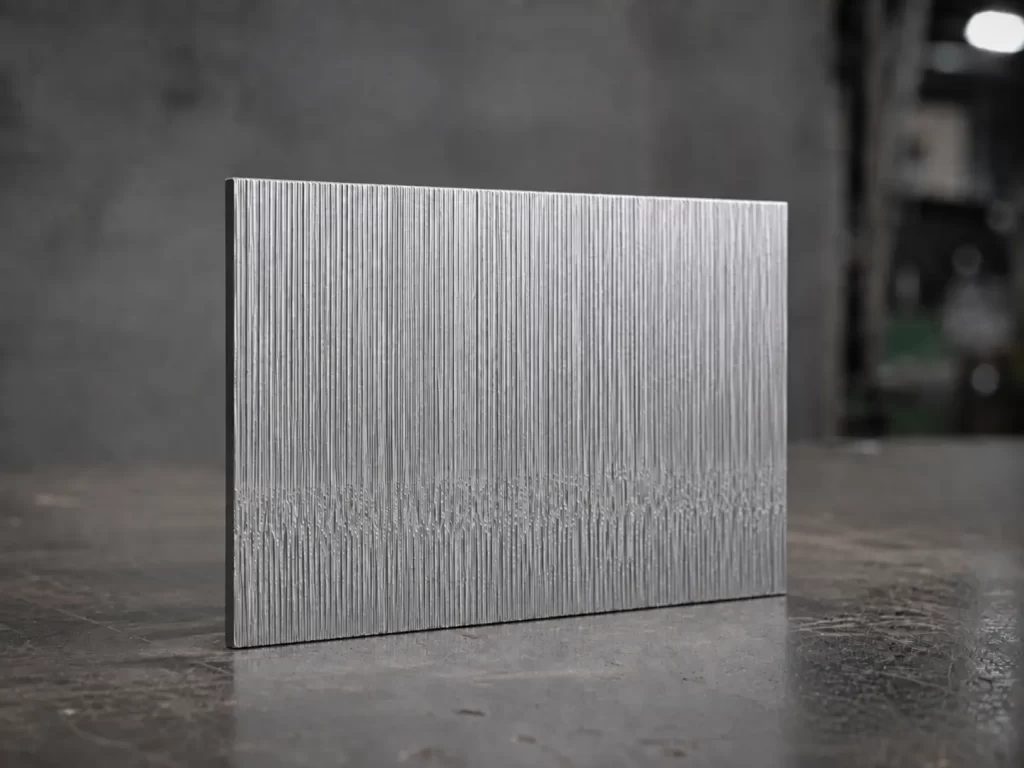
Bottom-edge dross and burrs are common issues when cutting thick plate.
Possible causes include insufficient laser power, unsuitable cutting speed, inadequate gas pressure, incorrect focus position, or a worn nozzle.
When these problems occur, the cut surface should be evaluated and the relevant parameters adjusted. Simply increasing laser power is not always the correct solution.
Small amounts of unavoidable burr can be removed using manual deburring, belt sanding, or other secondary finishing processes.
Heat-Affected Zone
Laser cutting produces a heat-affected zone along the cut edge. For thick carbon steel, a typical HAZ may be approximately 0.3–1.5 mm.
If the component will later be welded, heat-treated, or subjected to high fatigue loads, the effect of cutting heat on material properties should be considered during process planning.
Kerf Taper
When cutting thick plate, the kerf width at the top and bottom surfaces may differ.
Excessive taper can affect hole diameter and profile dimensions. Mounting holes, locating holes, and other functional features should therefore have clearly defined tolerances.
If laser cutting cannot consistently achieve the required accuracy, secondary machining can be used to bring critical features to final size.
Laser Cutting vs. Plasma Cutting vs. Waterjet Cutting
| Item | Fiber Laser | Plasma | Waterjet |
| Typical Advantageous Thickness Range | 6–30 mm | 6–50 mm and above | Broad range |
| Typical Tolerance | ±0.1–0.3 mm | ±0.5–1.0 mm | ±0.1–0.3 mm |
| Cut Edge Quality | Relatively fine | Relatively rough | Smooth |
| Heat Effect | Low | More noticeable | Essentially no heat-affected zone |
| Cost | Medium | Lower | Higher |
For 6–25 mm carbon steel parts with relatively demanding dimensional requirements, laser cutting is often the preferred option.
For thicker large structural parts where moderate accuracy is acceptable, plasma cutting may offer better cost efficiency.
If the component cannot tolerate significant thermal effects, waterjet cutting may be a more appropriate process.
Design Recommendations for Thick Carbon Steel Parts
Control Minimum Hole Diameter
Very small holes and slots should generally be avoided in thick plate designs.
As a basic guideline, the minimum hole diameter should be no smaller than the plate thickness. Where space permits, a hole diameter of at least 1.5 times the plate thickness can provide more stable cutting performance.
Avoid Very Small Internal Corners
Very sharp internal corners are not ideal for thick plate laser cutting.
Adding a suitable internal radius can reduce local heat concentration and help improve cut quality.
Consider Distortion in Long, Narrow Parts
Long narrow profiles, heavily perforated parts, and strongly asymmetric designs are more susceptible to heat-related distortion.
For these parts, nesting layout and cutting sequence may need to be adjusted. During drawing review, the manufacturer should also determine whether post-cut straightening or correction may be required.
Specify Tolerances Appropriately
Not every dimension needs a tight tolerance.
For general thick plate laser-cut parts, tolerances should be selected according to plate thickness and part geometry.
If critical holes require tolerances such as ±0.05 mm, secondary operations such as milling or boring will usually be required.
Tolerances and Cost for Thick Plate Laser Cutting
Typical laser cutting tolerances can be referenced as follows:
| Plate Thickness | Typical Tolerance |
| 6–12 mm | ±0.10–0.15 mm |
| 12–25 mm | ±0.15–0.25 mm |
| Above 25 mm | ±0.25–0.50 mm |
Actual achievable tolerances depend on part size, geometry, plate thickness, and machine capability.
As plate thickness increases, cutting speed decreases while material cost and assist-gas consumption generally rise. Processing cost therefore does not increase in direct proportion to thickness.
If the parts will later be powder coated or hot-dip galvanized, coating thickness should also be considered when specifying hole sizes and assembly dimensions.
How Is Quality Controlled from Prototype to Production?
Before production begins with a new material grade or plate thickness, trial cuts should be performed to confirm laser power, speed, focal position, and assist-gas settings.
Once the first part is completed, critical dimensions and cut-edge quality should be inspected.
During batch production, in-process sampling should be carried out according to production volume. Operators should also monitor nozzle condition and variations between material batches.
For projects requiring traceability, material certificates, first-article inspection reports, in-process inspection records, and final inspection reports can be retained for quality verification.
What Information Is Needed for a Thick Carbon Steel Laser Cutting RFQ?
Complete RFQ documentation reduces unnecessary communication and helps improve quotation accuracy.
Recommended information includes:
- 2D or 3D CAD files
- PDF engineering drawings
- Material grade and plate thickness
- Required quantity
- Surface finishing requirements
- Critical dimensions and tolerances
- Required delivery schedule
If the parts also require welding, tapping, bending, or machining, these requirements should also be identified on the drawings or RFQ documents.
How We Support Thick Carbon Steel Fabrication Projects
We provide thick carbon steel laser cutting based on customer drawings and can coordinate the required secondary fabrication processes according to the component design.
Before production, our engineering team reviews hole and slot dimensions, tolerance requirements, and potential distortion risks.
If certain features are not suitable for direct laser cutting, we can identify them during the drawing review and recommend alternative manufacturing methods.
For projects requiring bending, welding, tapping, powder coating, or galvanizing, the full manufacturing process can be evaluated as part of the same production plan.
Send us your CAD files, material grade, plate thickness, quantity, and technical requirements, and we can review the design for manufacturability and prepare a quotation based on the actual part specifications.
Frequently Asked Questions
How thick can a laser cut carbon steel?
Fiber laser systems above 10 kW can commonly process carbon steel in the 25–30 mm range under suitable conditions. Higher-power machines can cut thicker material, although cut quality, speed, and processing cost must also be considered.
How much laser power is needed for thick carbon steel?
As a general reference, 6–12 mm carbon steel may require approximately 3–4 kW, while 12–25 mm plate may use 6–10 kW. Thicknesses above 25 mm generally require higher-power equipment.
Should oxygen or nitrogen be used for thick carbon steel cutting?
Oxygen is commonly used for thick carbon steel because the oxidation reaction provides additional heat during cutting. Nitrogen may be used when reduced edge oxidation is required, although processing costs are usually higher.
What is the difference between laser and plasma cutting for thick plate?
Laser cutting generally provides better dimensional accuracy and finer cut edges. Plasma cutting is often more economical for thicker, larger structural parts where tight tolerances are not required.
What information should be included in an RFQ for thick carbon steel parts?
Provide engineering drawings, material grade, plate thickness, quantity, surface treatment requirements, tolerances, and delivery requirements. The more complete the documentation, the more accurately the manufacturer can evaluate the process and prepare a quotation.
