
 Language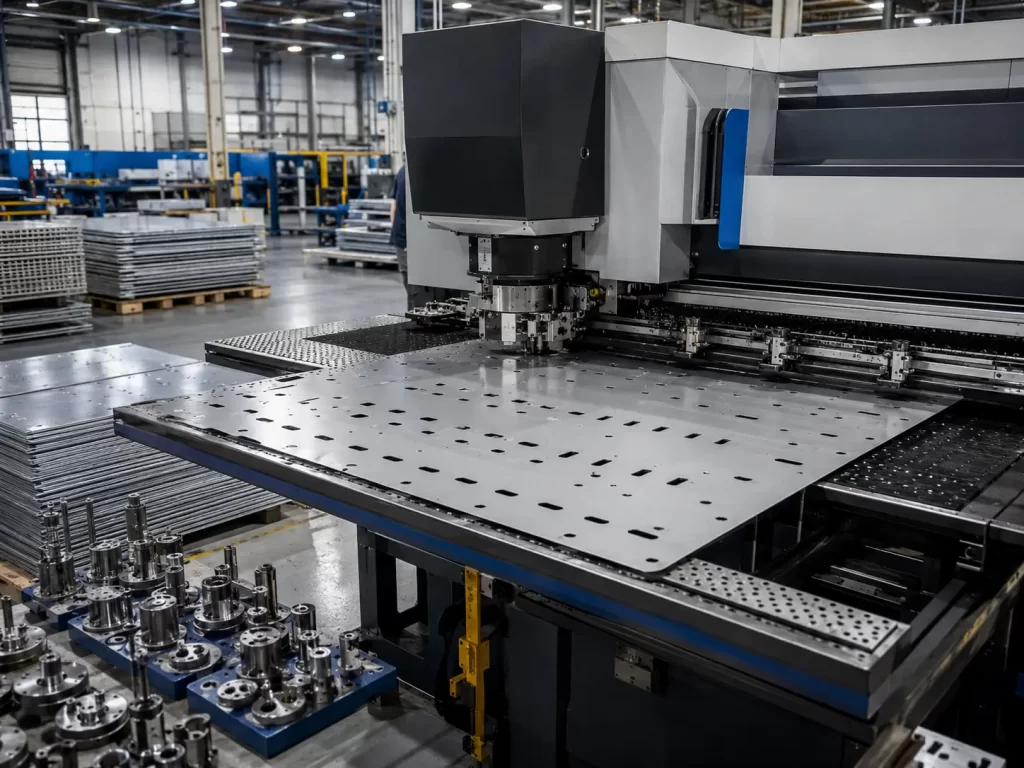
CNC punching is a sheet metal fabrication process that uses CNC punch presses, turret punch presses, or punch-laser combination machines to create round holes, slots, notches, louvers, flanged holes, countersinks, and custom openings in metal sheets such as cold-rolled steel, galvanized steel, stainless steel, and aluminum. It is widely used for electrical enclosures, equipment panels, cabinet bases, mounting brackets, ventilation panels, and other precision sheet metal parts.
For customers outsourcing sheet metal fabrication, the key concern is usually not simply whether the holes can be punched. What matters more is whether the hole positions remain consistent, whether burrs are controlled, and whether the approved prototype can be reliably repeated in batch production. According to Grand View Research, the global sheet metal market was valued at approximately USD 181.8461 billion in 2024 and is expected to reach USD 272.2612 billion by 2030, with a projected CAGR of about 7% from 2025 to 2030. This indicates that demand for sheet metal components is still growing, and customers will continue to place higher expectations on stable production and on-time delivery.
Source: Grand View Research
Drawing Review Before Fabrication
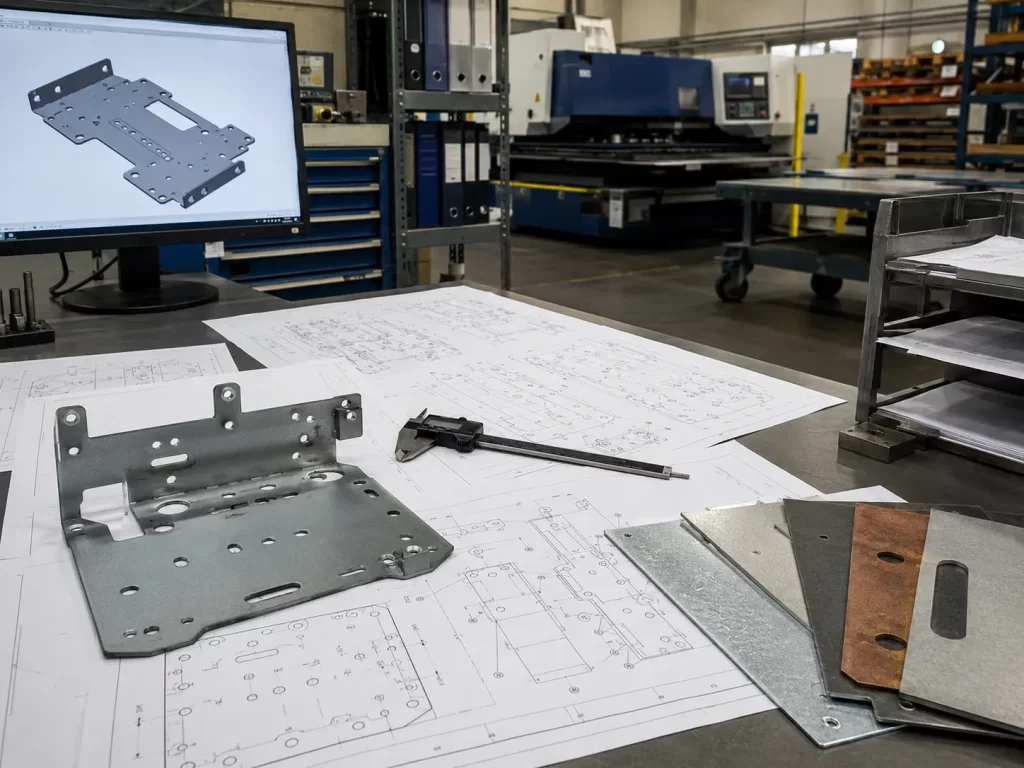
A reliable CNC punching solution does not begin with a quotation. It begins with drawing review. After the customer provides 2D drawings, 3D files, material grade, sheet thickness, tolerance requirements, and surface finishing specifications, the manufacturer needs to check whether there are conflicts between hole diameter, hole spacing, bend lines, burr direction, visible surfaces, and final assembly requirements.
When Baoxuan Sheet Metal Fabrication Factory handles drawing-based projects, several details are usually checked carefully: whether the hole-position datum is clear, whether densely punched areas may cause distortion, whether small holes are close to the material’s processing limit, and whether the part will later require PEM insertion, welding, bending, or powder coating. Many rework issues do not start on the production floor. They often begin with unclear drawing interpretation.
For example, the indicator holes, button holes, and lock holes on a control cabinet panel may appear simple, but they are directly related to the installation positions of electrical components. Even a small hole-position deviation can cause assembly interference. Clarifying these details before production is usually far more reliable than trying to fix them later.
Key Points in Prototype Verification
The purpose of prototyping is to verify whether the selected fabrication route can be repeated. Producing one sample only proves initial feasibility. A prototype becomes meaningful when its dimensions are stable, the hole edges are acceptable, and the downstream processes can be completed smoothly.
During prototyping, the main inspection points include hole-position tolerance, burr control, surface indentation, flatness, flanged-hole forming quality, and bending interference. For multi-hole sheet metal parts such as ventilation panels, cabinet doors, and equipment panels, nesting layout and punching sequence also need attention because punching stress can affect panel flatness.
During sample approval, Baoxuan Precision Manufacturing usually marks critical dimensions, visible surfaces, and assembly points separately. This adds one more step to the communication process, but it helps reduce repeated revisions once the project moves into batch production.
Comparison of Different Fabrication Methods
CNC punching, laser cutting, and punch-laser combination processing each have their own suitable applications. The choice should not be based on unit price alone.
| Process | Suitable Products | Advantages | Limitations |
| CNC punching | Multi-hole panels, ventilation panels, cabinet bases | High efficiency, good hole-position consistency, suitable for louvers and flanged holes | Requires matching punch tooling; less flexible for complex outer profiles |
| Laser cutting | Low-volume custom parts, complex profiles | No tooling required, flexible for prototyping | Not always the most efficient option for dense small-hole patterns |
| Punch-laser combination | Parts with many holes and complex profiles | Combines punching efficiency with laser flexibility | Higher requirements for programming and production planning |
| Stamping die production | High-volume parts with stable designs | Low unit cost and fast cycle time | Higher upfront tooling cost; less flexible when designs change |
In terms of machine efficiency, TRUMPF’s official data for the TruPunch 5000 shows a maximum punching rate of up to 1,600 strokes per minute and a marking speed of up to 2,800 strokes per minute. This does not mean every order can run at the machine’s maximum capacity, but it does show that CNC punching still offers a clear efficiency advantage for repetitive sheet metal parts with many holes.
Source: TRUMPF
Quality Control in Batch Production
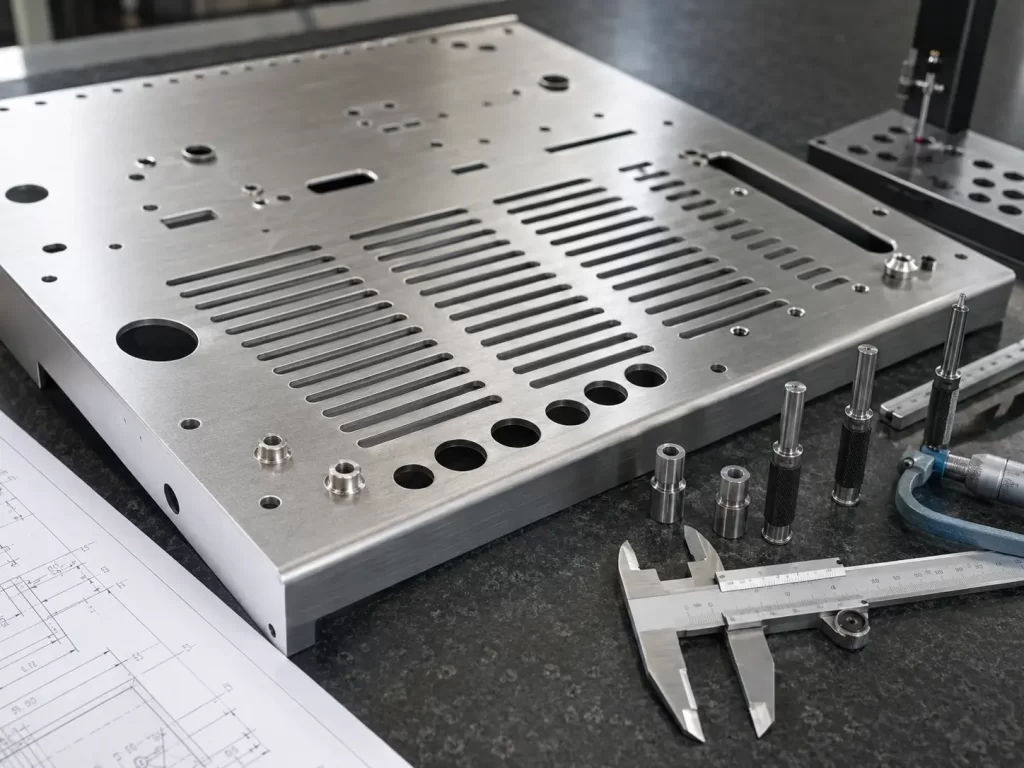
After the prototype is approved, stable mass production depends on process documentation and shop-floor control. CNC program versions, tool numbers, punch condition, material batches, first-piece inspection, in-process inspection, and final inspection should all be traceable.
ISO 9001:2015 requires organizations to establish, implement, maintain, and continually improve a quality management system, with the aim of consistently meeting customer requirements and improving process performance. For a sheet metal fabrication company, this translates into controlled drawings, process inspection, nonconformance handling, and traceable production records.
Source: ISO
Common issues in batch CNC punching include punch wear, increased burrs, minor sheet distortion, deviation in PEM holes, and hole blockage after powder coating. In batch orders, Baoxuan Metal Fabrication Factory treats critical holes and assembly holes as key inspection points to prevent problems from reaching the customer’s assembly line.
What Buyers Should Look for in a CNC Punching Supplier
When selecting a CNC punching supplier, buyers should not look only at the equipment list. It is more practical to evaluate the supplier’s drawing review capability, prototyping response, process recommendations, quality records, and delivery support.
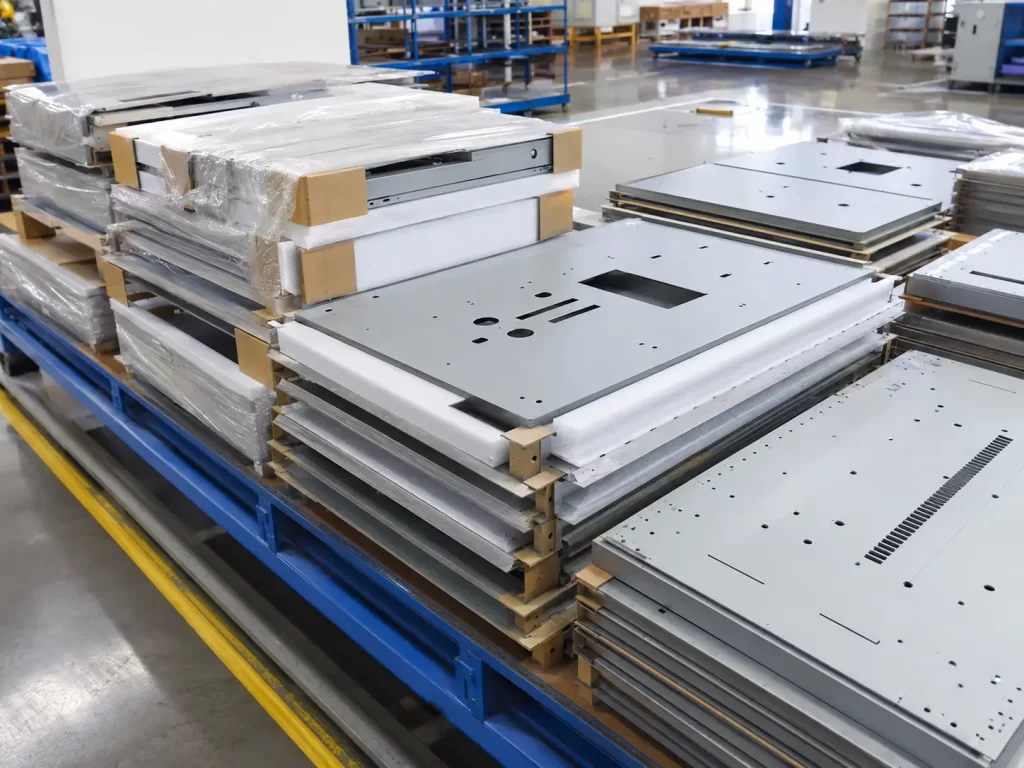
If a supplier can proactively explain material selection, hole-position tolerances, burr direction, bending impact, surface treatment, and packaging protection, it usually has solid experience in outsourced fabrication projects. If a supplier only provides a price without discussing process risks, dimensional disputes and delivery instability are more likely to appear later.
In recent years, automatic loading and unloading systems, digital production scheduling, barcode traceability, punch-laser combination processing, and online inspection have become more common in sheet metal production. For buyers, the real value of these technologies is not that they sound advanced. Their value lies in improving batch consistency, shortening lead times, and reducing missed inspections caused by manual handling.
FAQ
How should buyers choose a CNC punching supplier for sheet metal fabrication?
Focus on drawing review, prototype verification, hole-position inspection, batch production records, and delivery support. A supplier that can identify manufacturing risks early is usually better suited for long-term cooperation.
What information is needed for CNC punching prototyping based on customer drawings?
It is best to provide 2D drawings, 3D files, material grade, sheet thickness, tolerance requirements, surface finish, visible surface requirements, and estimated order volume.
Is CNC punching or laser cutting better for outsourced sheet metal fabrication?
CNC punching is usually more suitable for stable batch production with many repeated holes. Laser cutting is better for low-volume parts, frequent design changes, and complex outer profiles. For more complex projects, a punch-laser combination process may be more suitable.
Does CNC punching create burrs?
Yes, some burrs are normal in punching. Burr size depends on punching clearance, tool condition, material hardness, and secondary finishing. Deburring, chamfering, or brushing can be used when cleaner edges are required.
Why is prototyping necessary before batch production?
Prototyping helps confirm hole positions, burr level, flatness, forming quality, and compatibility with downstream processes. It reduces the risk of batch rework and delivery delays.
Project Consultation and Drawing Review
The core of a CNC punching solution is converting drawing requirements into a stable and executable production process. If you have projects involving electrical enclosures, equipment panels, ventilation panels, mounting brackets, or OEM sheet metal parts, you can prepare your drawings, material requirements, order quantity, and delivery expectations for further technical review. The clearer the drawings and requirements are, the more accurate the fabrication plan will be, and the more stable the production process becomes.
