
 Language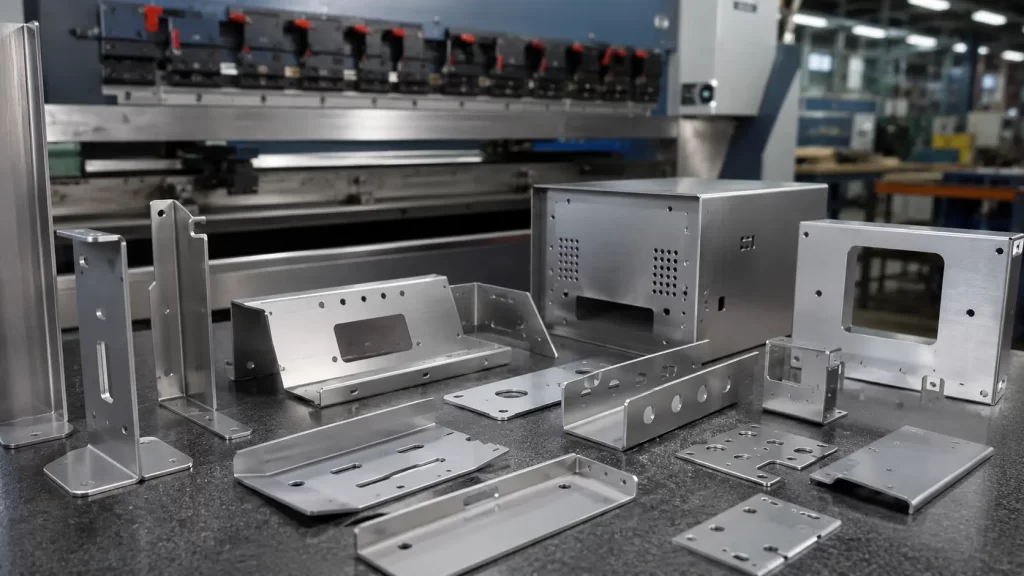
CNC Sheet Metal Bending Starts with the Drawing, Not the Price CNC sheet metal bending is a forming process that uses a press brake and dedicated tooling to bend cut metal sheets into specified angles, flanges, channels, enclosures, brackets, or structural components. At first glance, it may look like a simple process of pressing a […]
Author Archives: huangchuyu
08
Jun
Jun
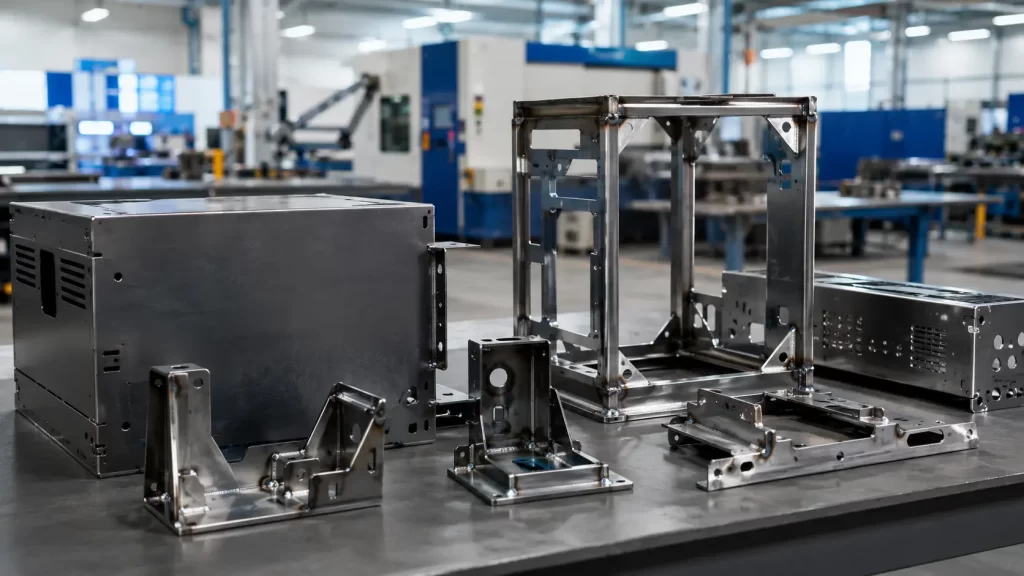
The Role of Sheet Metal Welding in Structural Fabrication Sheet metal structural welding refers to the process of joining laser-cut, CNC-bent, punched, or PEM-inserted metal components into functional assemblies through welding, straightening, grinding, and surface finishing. These welded sheet metal structures are commonly used in equipment enclosures, metal brackets, machine frames, control cabinets, automation bases, […]
01
Jun
Jun
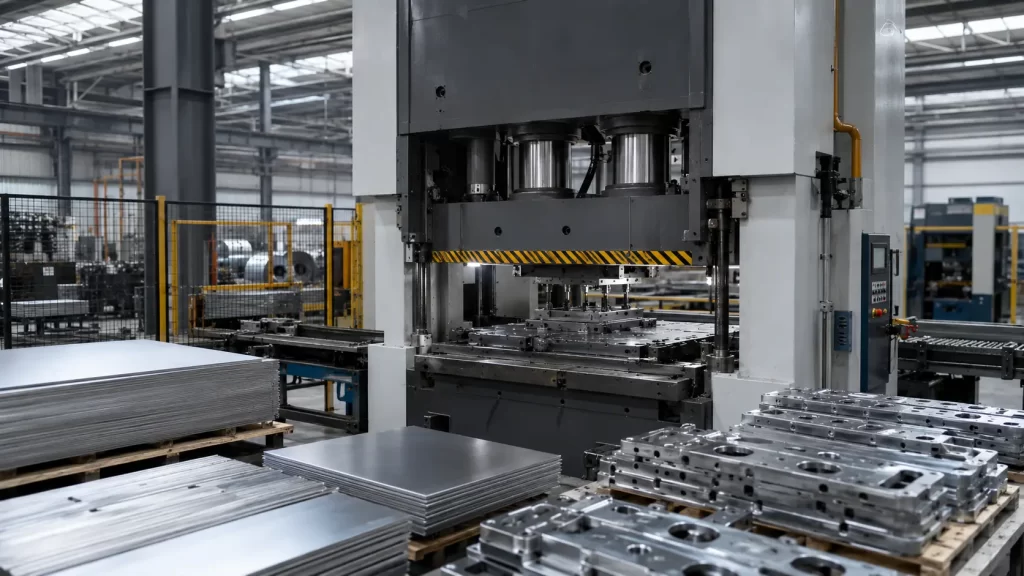
Custom metal stamping is a manufacturing process that uses stamping dies and press equipment to cut, bend, draw, flange, and form sheet metal into parts that meet specific structural, dimensional, and assembly requirements. For customers outsourcing production, the key question is not how large the press is, but whether the supplier can consistently turn engineering […]
28
May
May
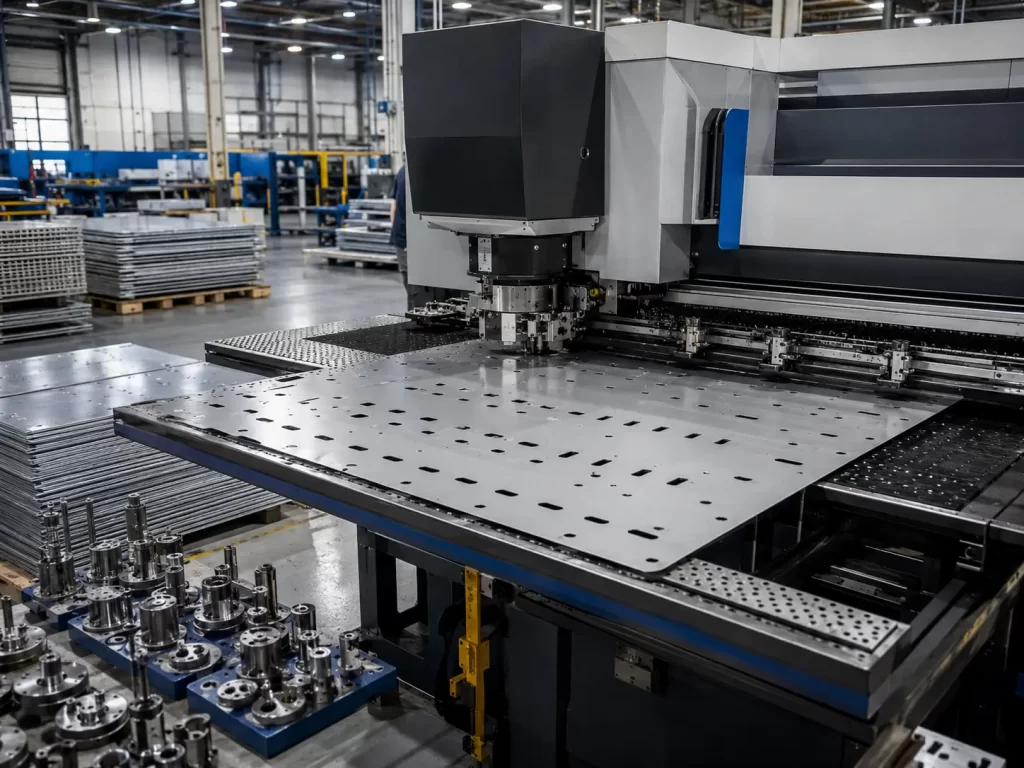
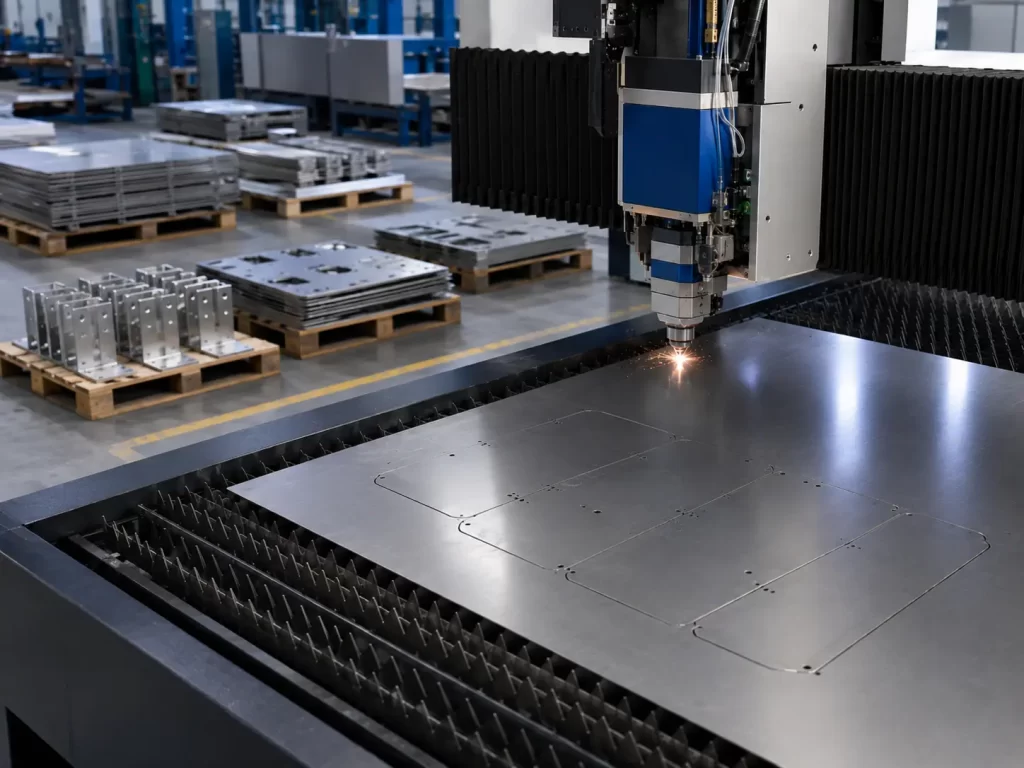
CNC punching is a sheet metal fabrication process that uses CNC punch presses, turret punch presses, or punch-laser combination machines to create round holes, slots, notches, louvers, flanged holes, countersinks, and custom openings in metal sheets such as cold-rolled steel, galvanized steel, stainless steel, and aluminum. It is widely used for electrical enclosures, equipment panels, […]
18
May
May
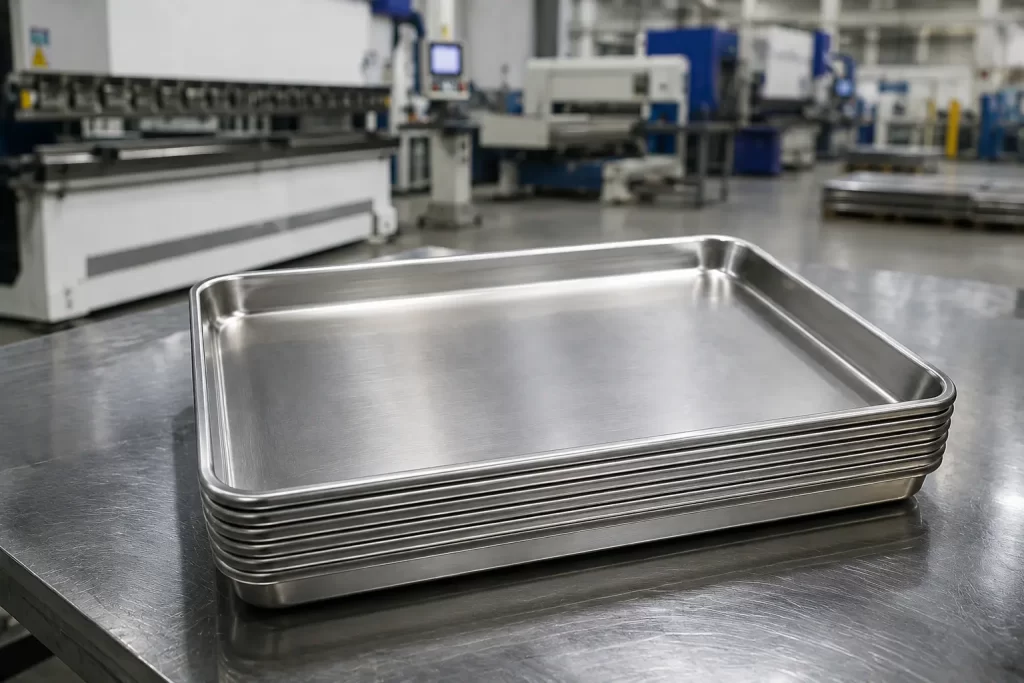
Defining the Process Stainless steel laser cutting uses a high-energy-density beam to locally melt the material, with assist gas blowing away the dross to produce profiles, holes, slots, and complex geometries. In my experience discussing projects with clients, one point comes up repeatedly: the real measure of a shop’s capability isn’t spindle power or cutting […]
12
May
May
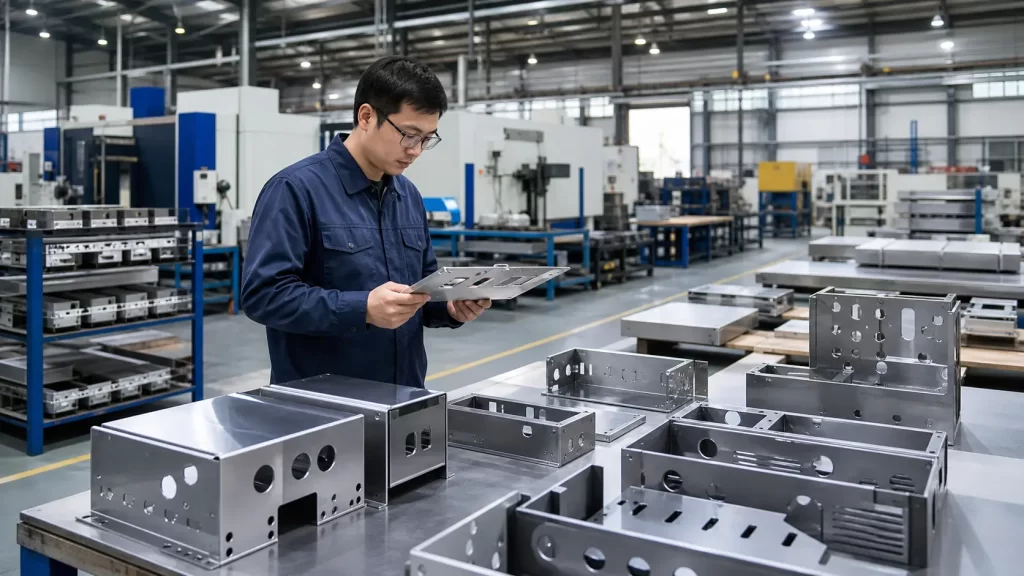
Sheet metal baking tray fabrication involves transforming flat metal sheets into finished baking trays through processes such as laser cutting, bending, welding, and surface finishing. For food-grade baking trays, product quality depends not only on machine precision, but also on material consistency, engineering design, and overall process control. Over the years, I’ve noticed that many […]
06
May
May
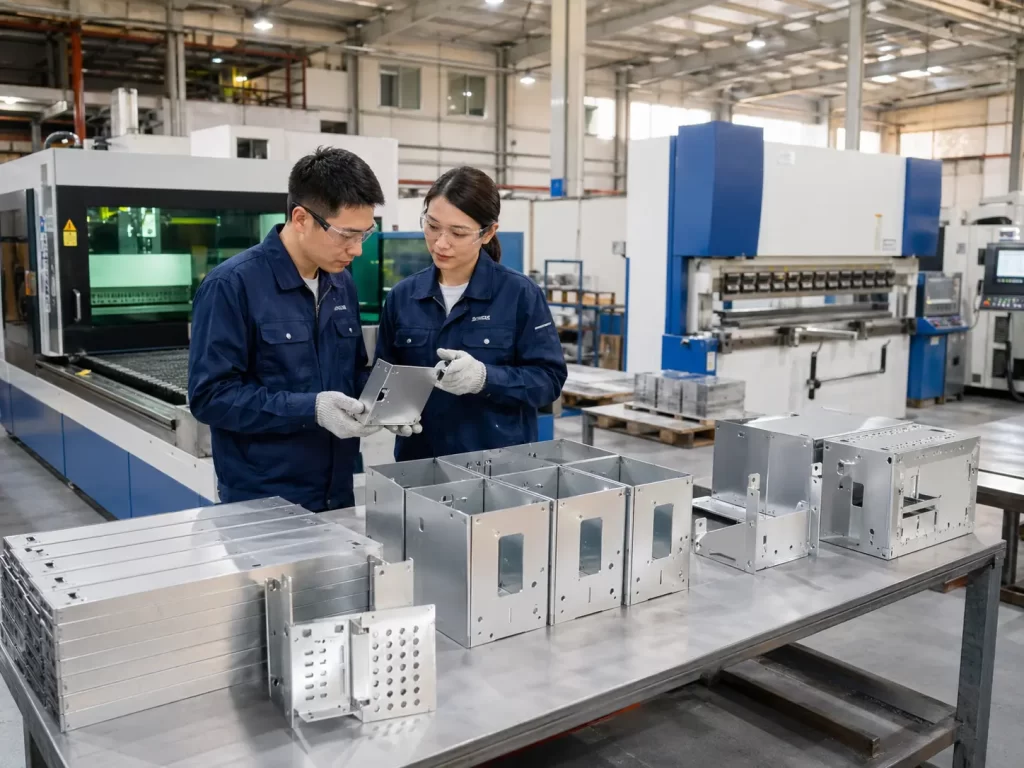
Metal deburring and polishing is the process of removing sharp edges, dross, burrs around holes, raised weld marks, and surface scratches after sheet metal parts have been laser cut, punched, bent, or welded. Although this step usually comes later in production, it has a direct impact on assembly safety, surface finishing quality, and the consistency […]
27
Apr
Apr
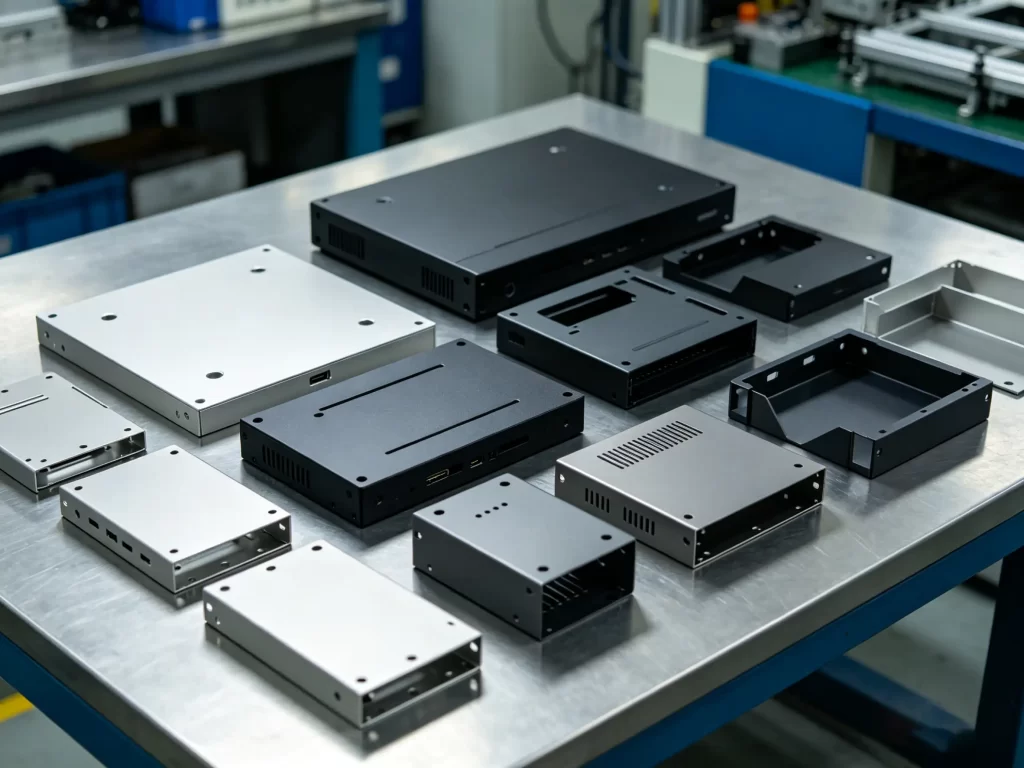
In OEM sheet metal projects, raised areas, bulges, and localized deformation can directly affect assembly accuracy, surface appearance, and batch-to-batch consistency. For overseas buyers, the key question is not simply whether a defect can be fixed. What really matters is whether the supplier can control risks early through material selection, structural review, process planning, and […]
23
Apr
Apr
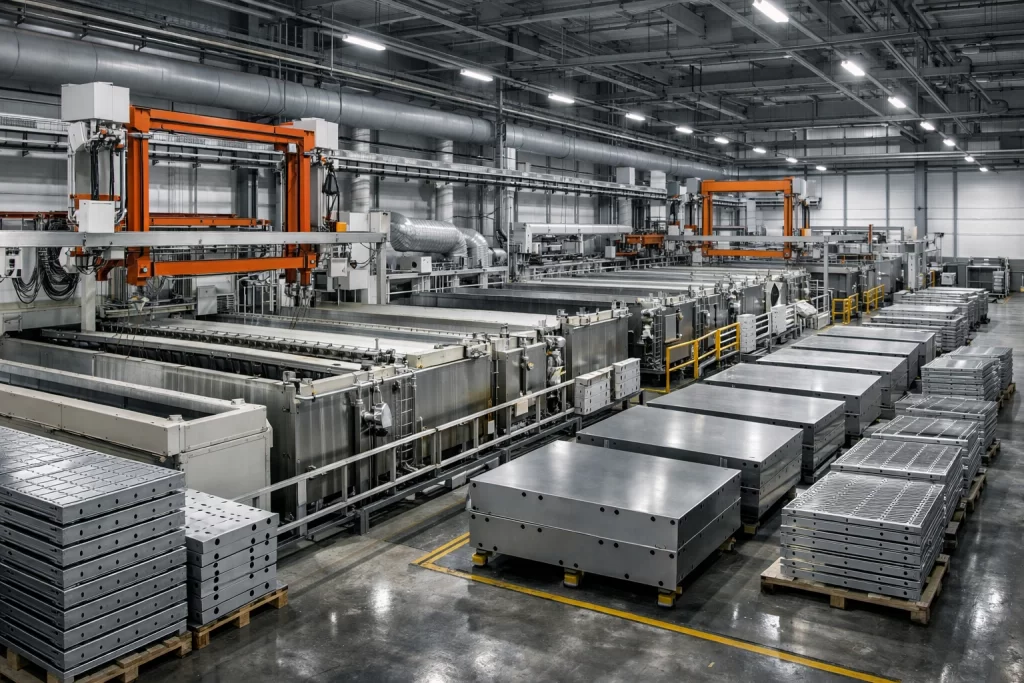
Aluminum anodizing is often treated as a routine finishing step. In outsourced manufacturing, though, it affects far more than color and appearance. Alloy grade, pretreatment method, coating thickness, sealing condition, racking points, and inspection criteria can all shape how samples are judged and how stable production remains later on. When I review projects like this, […]
14
Apr
Apr
In sheet metal fabrication projects, surface treatment has a direct impact on corrosion resistance, coating adhesion, and consistency in batch production. When working with overseas buyers, we usually begin by confirming the service environment, the intended coating system, and the acceptance criteria before recommending the right pretreatment solution. Phosphating is a critical part of that […]